

1469
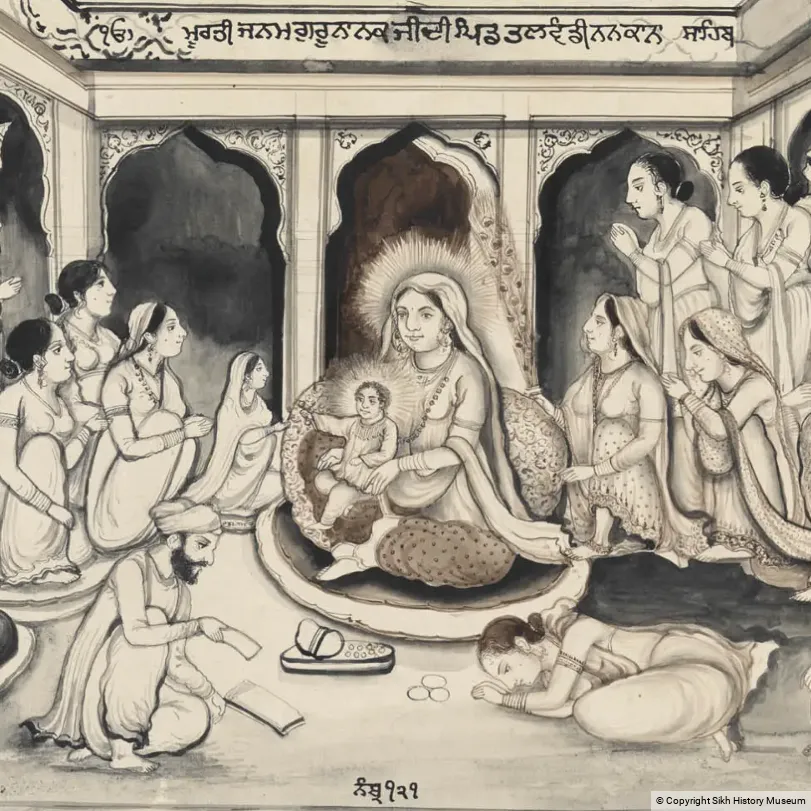
Birth of Guru Nanak
1469
Guru Nanak, the founder of Sikhism, born in Nankana Sahib near Lahore into a Hindu merchant (Khatri) family of the Bedi clan.
Birth of Guru Nanak
1496
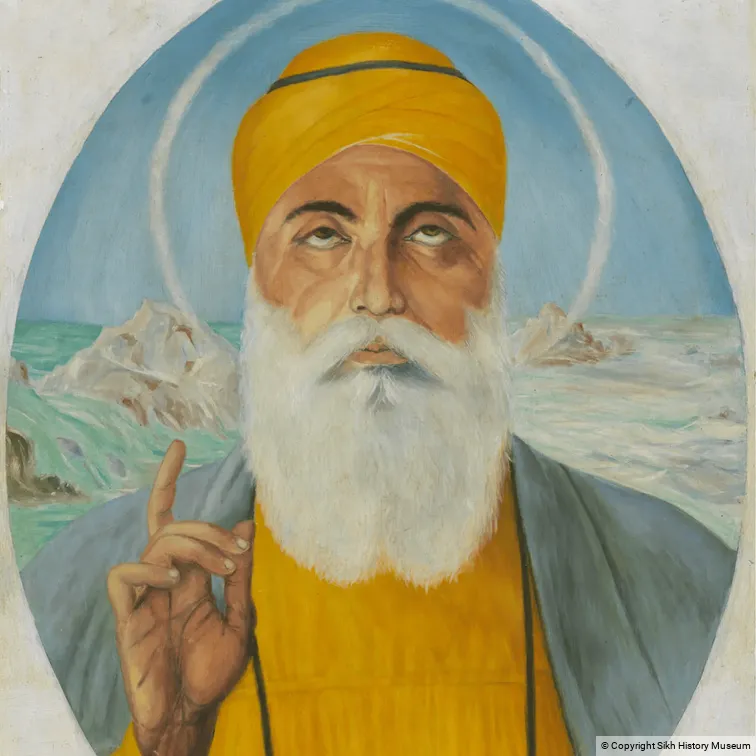
The Guru's Message of Unity
1496
Guru Nanak declared “There is no Hindu, there is no Muslim”, after experiencing the Divine, emphasizing the unity of humanity.
The Guru's Message of Unity
1500
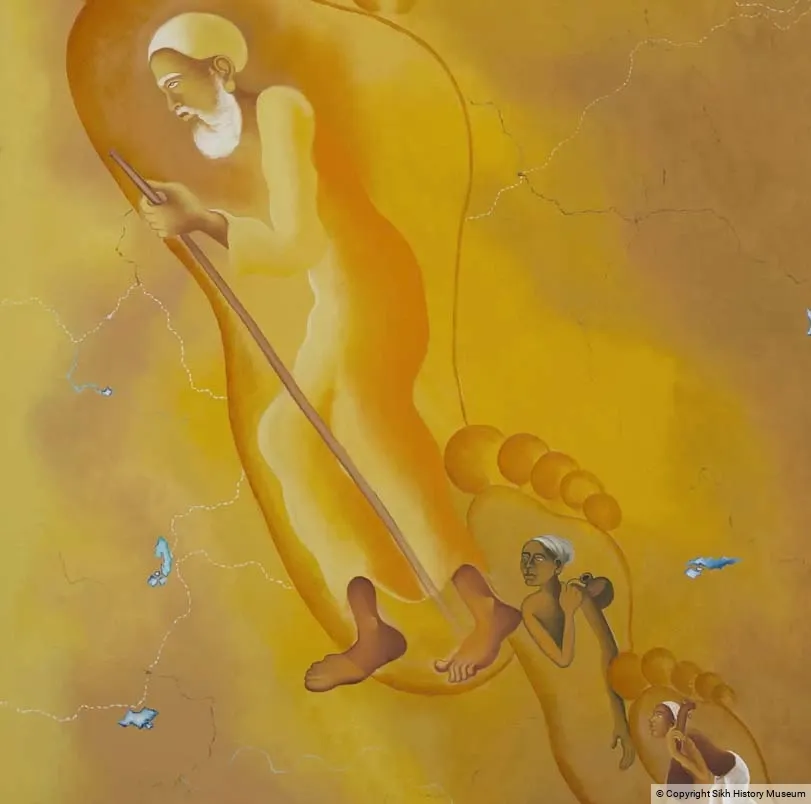
Guru Nanak's Travels
1500
Guru Nanak begins his lengthy travels, covering 28,000 kms (17,500 miles) over 24 years, across India, South Asia and the Middle East.
Guru Nanak's Travels
1520
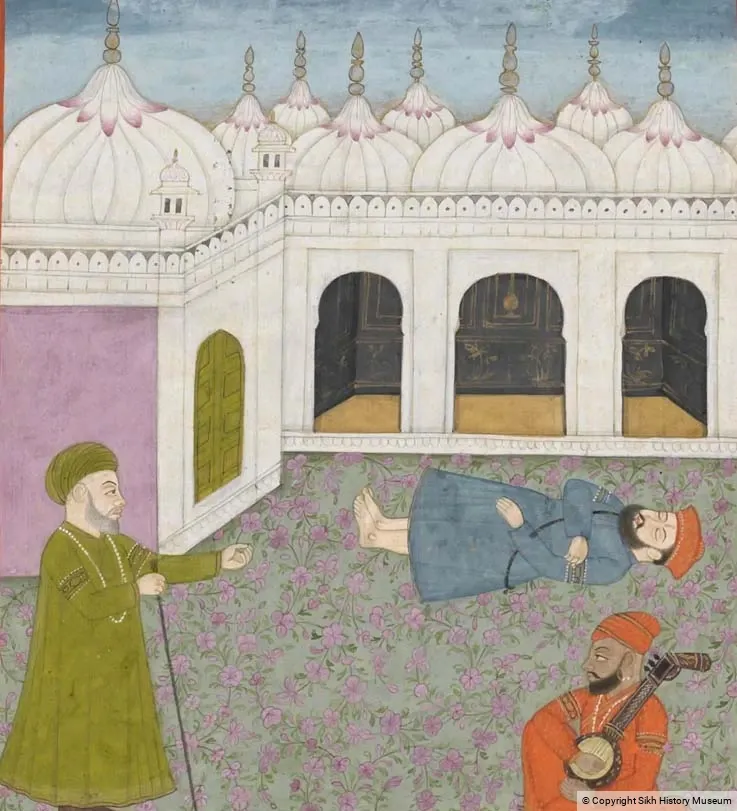
God Is Omnipresent
1520
Guru Nanak arrives in Mecca, visiting the Kabba, preaching about God’s omnipresence and the importance of virtuous action.
God Is Omnipresent
1525
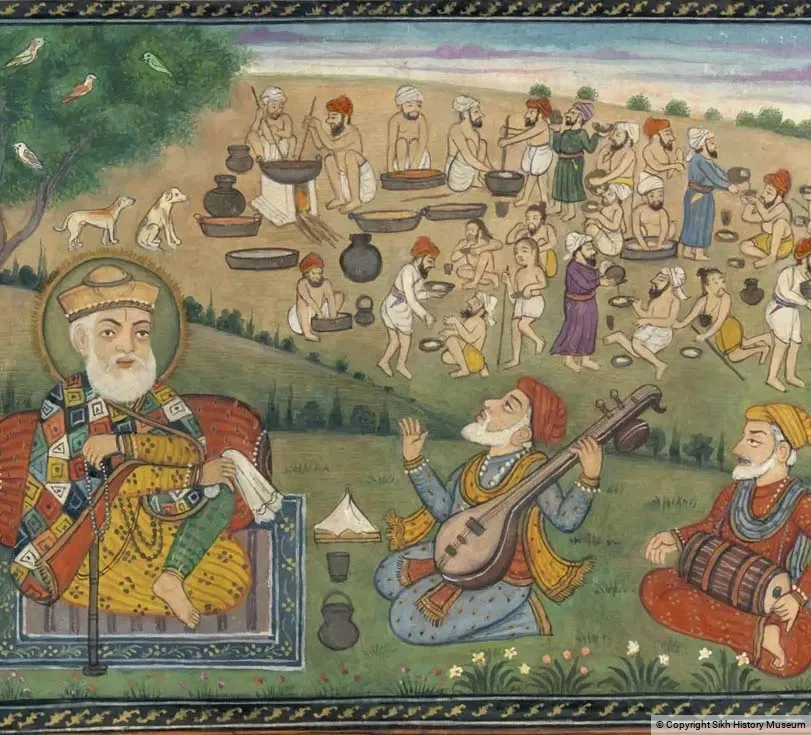
Kartarpur Established
1525
Guru Nanak settles a new city named Kartarpur, where a free communal kitchen (langar) was established and the community would gather for worship.
Kartarpur Established
1539
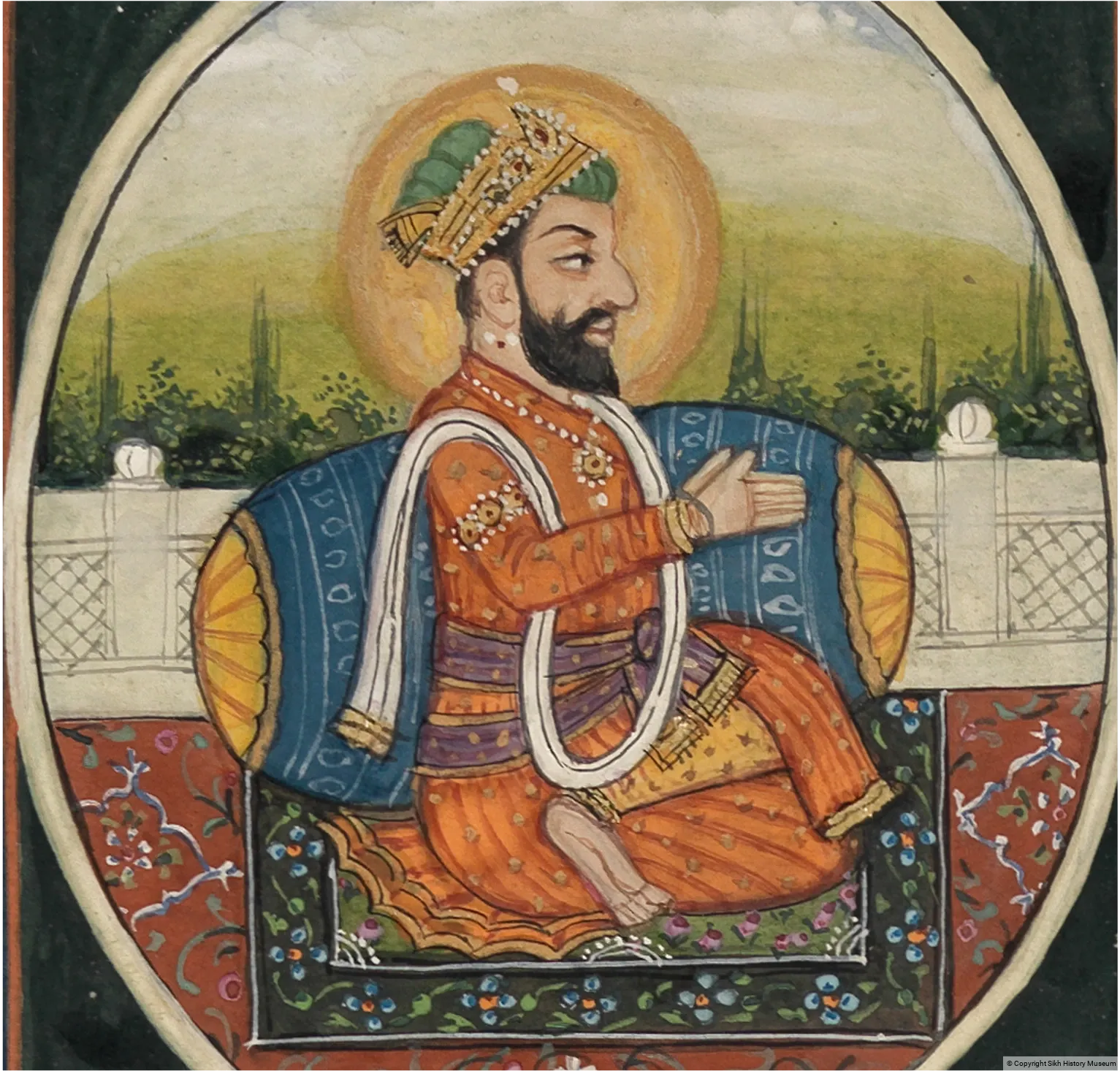
The Second Guru
1539
Guru Angad (1504-1552) is anointed as Guru, and he formalizes the Gurmukhi script and commissioning the life stories of Guru Nanak, called the Janamsakhis.
The Second Guru
1552
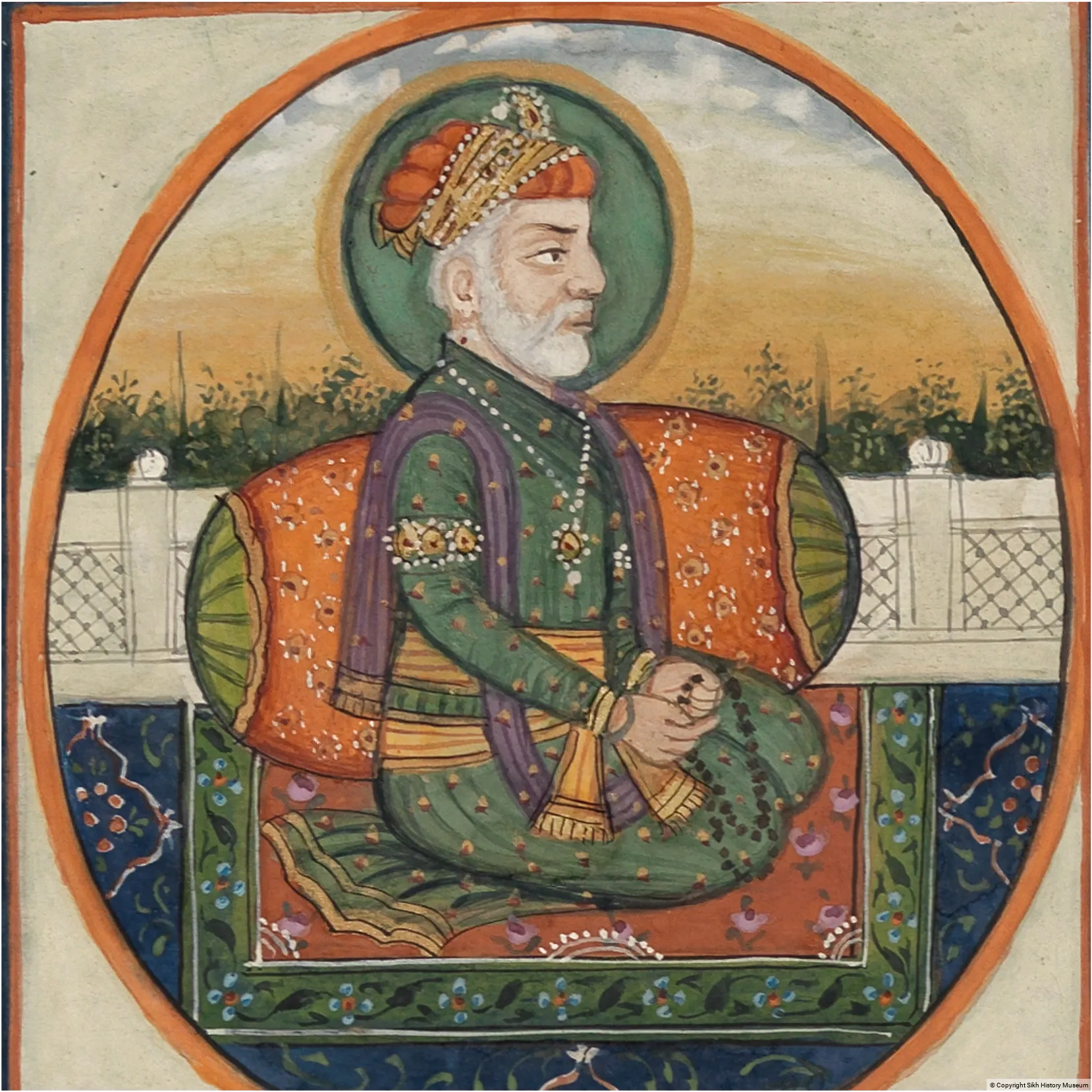
The Third Guru
1552
Guru Amardas (1479-1574) anointed as Guru, who established the Sikh community at Goindwal, preaching for the equality of all, and writing devotional poetry.
The Third Guru
1574
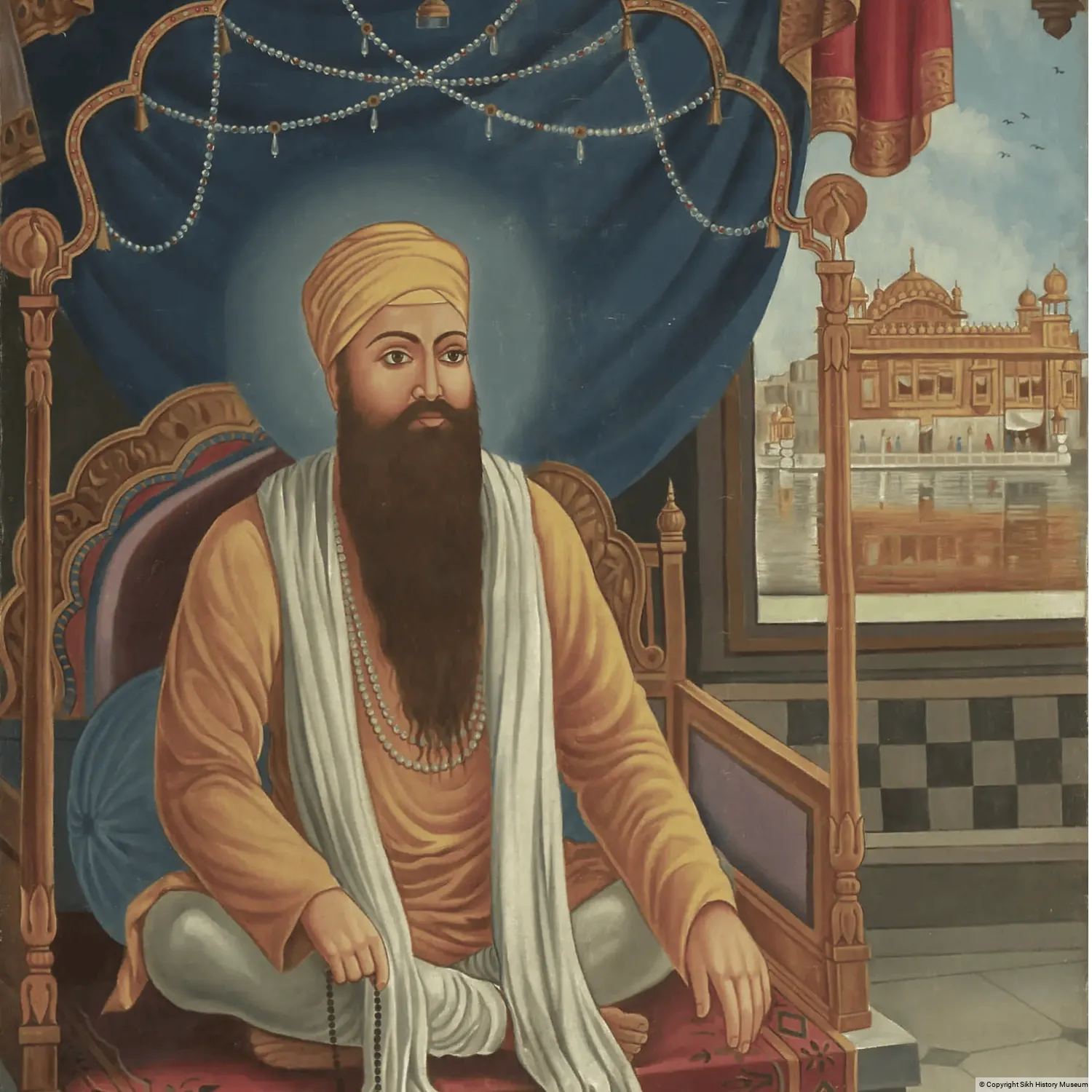
The Fourth Guru
1574
Guru Ramdas (1534-1581) anointed as Guru – was the architect and founder of the city of Amritsar, including its sacred pond (sarovar).
The Fourth Guru
1577
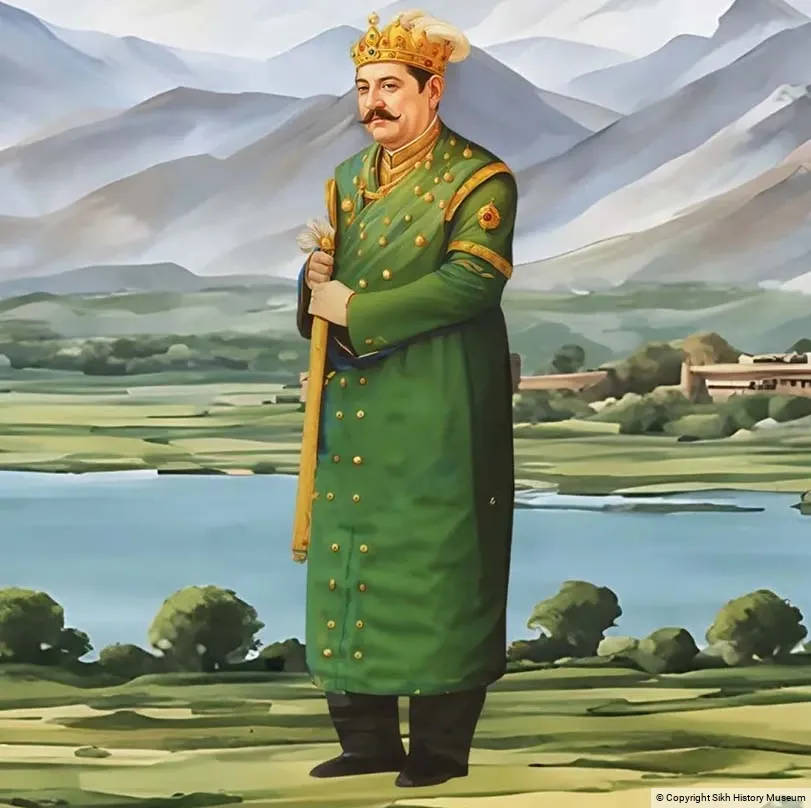
Royal Patronage
1577
Akbar (1542-1605), the most tolerant of the Mughal Emperors, (reign 1556-1605), granted land for the Guru’s use where Amritsar is now located.
Royal Patronage
1581
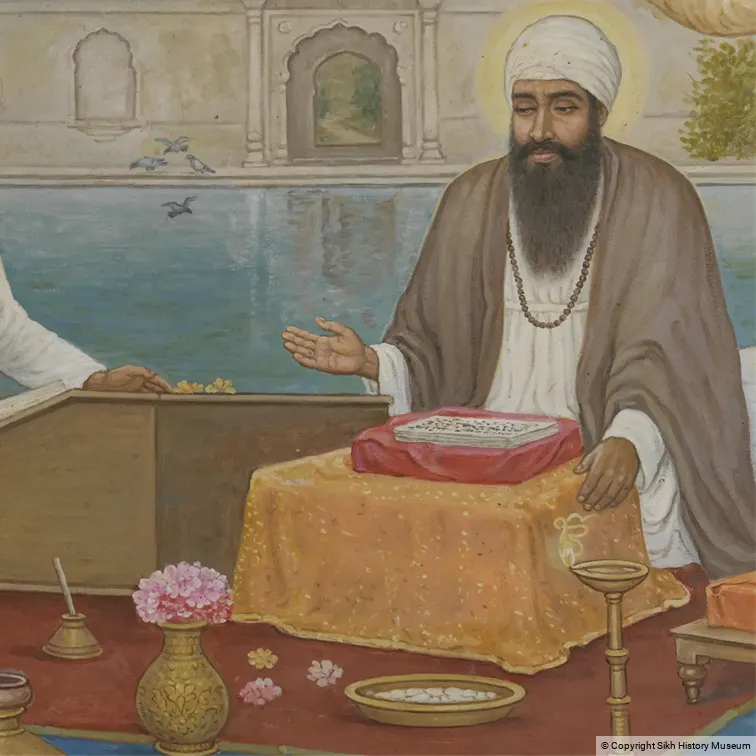
The Fifth Guru
1581
Guru Arjan (1563-1606) anointed Guru builds the Harimandar in Amritsar and assembles the Adi Granth, a compilation of the Gurus writings along with other Saints.
The Fifth Guru
1601
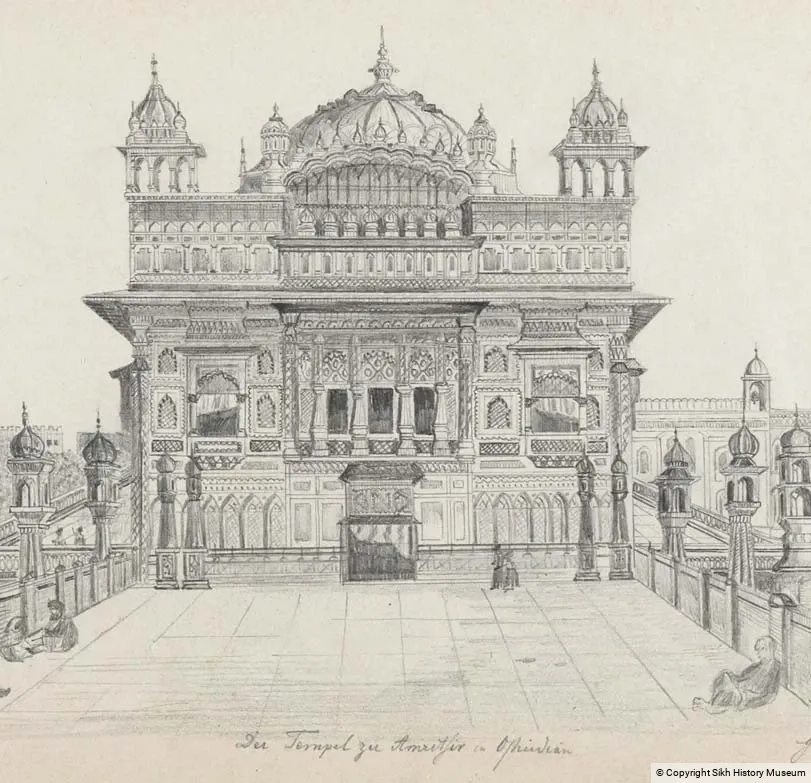
Golden Temple Built
1601
Harimandar Sahib, also known as the Golden Temple, completed in 1601. The Adi Granth was installed within the temple in 1604.
Golden Temple Built
1606
The Timeless Throne
1606
The Akal Takat (Throne of the Timeless) is established in Amritsar as an institution where temporal matters related to the community could be discussed.
The Timeless Throne
1606
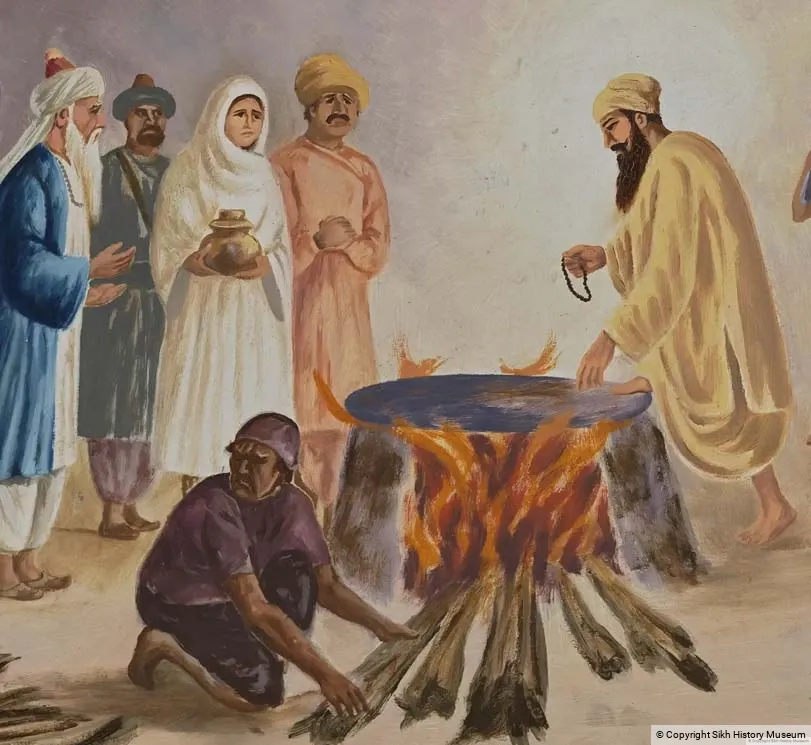
Martyrdom of Guru Arjun
1606
Due to the growing popularity of Guru Arjan, Mughal Emperor Jahangir demands that he convert to Islam, when the Guru refuses, he is put to death.
Martyrdom of Guru Arjun
1606
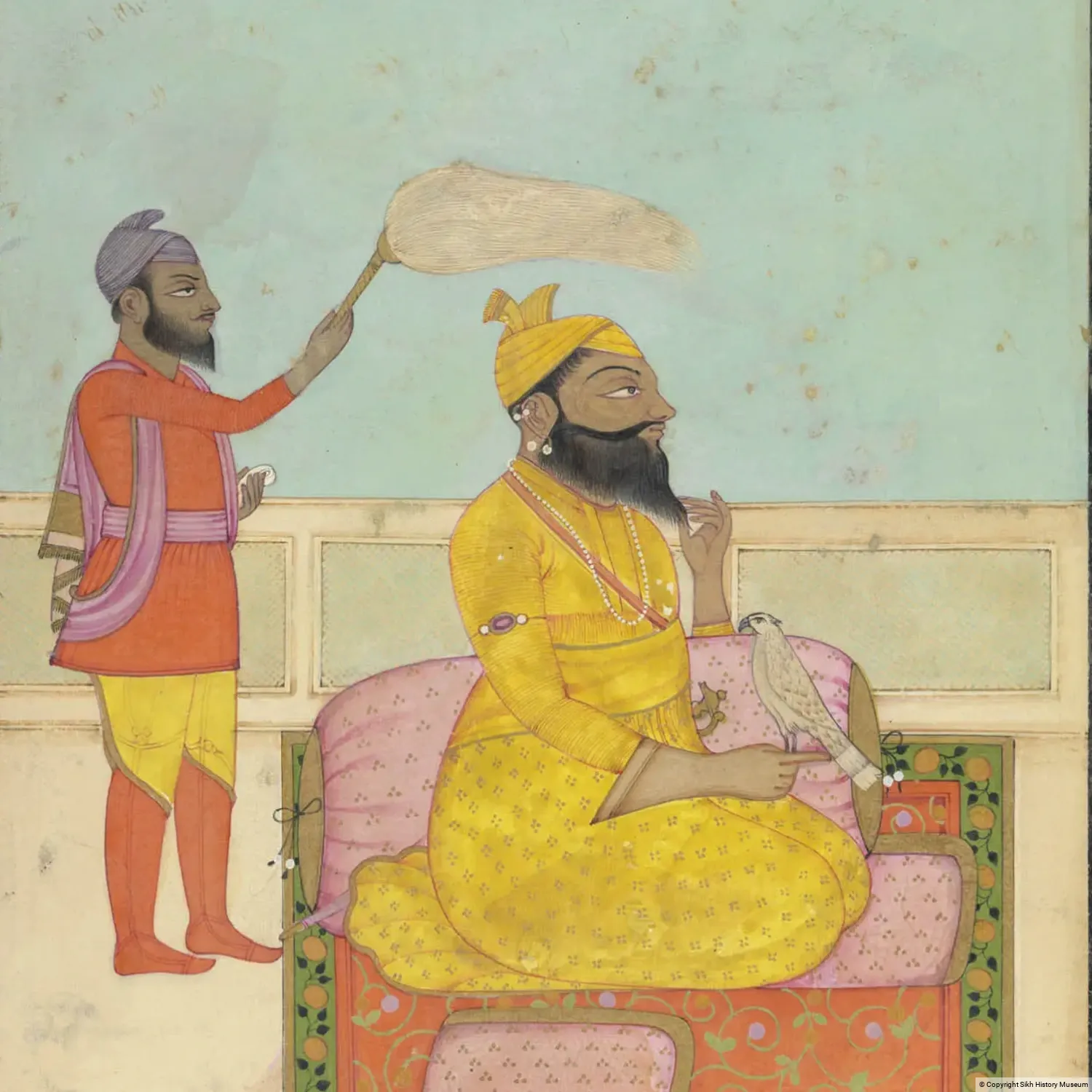
The Sixth Guru
1606
Guru Hargobind (1595-1644), militarized the Sikh community, fighting back against the oppressive Mughal government.
The Sixth Guru
1644
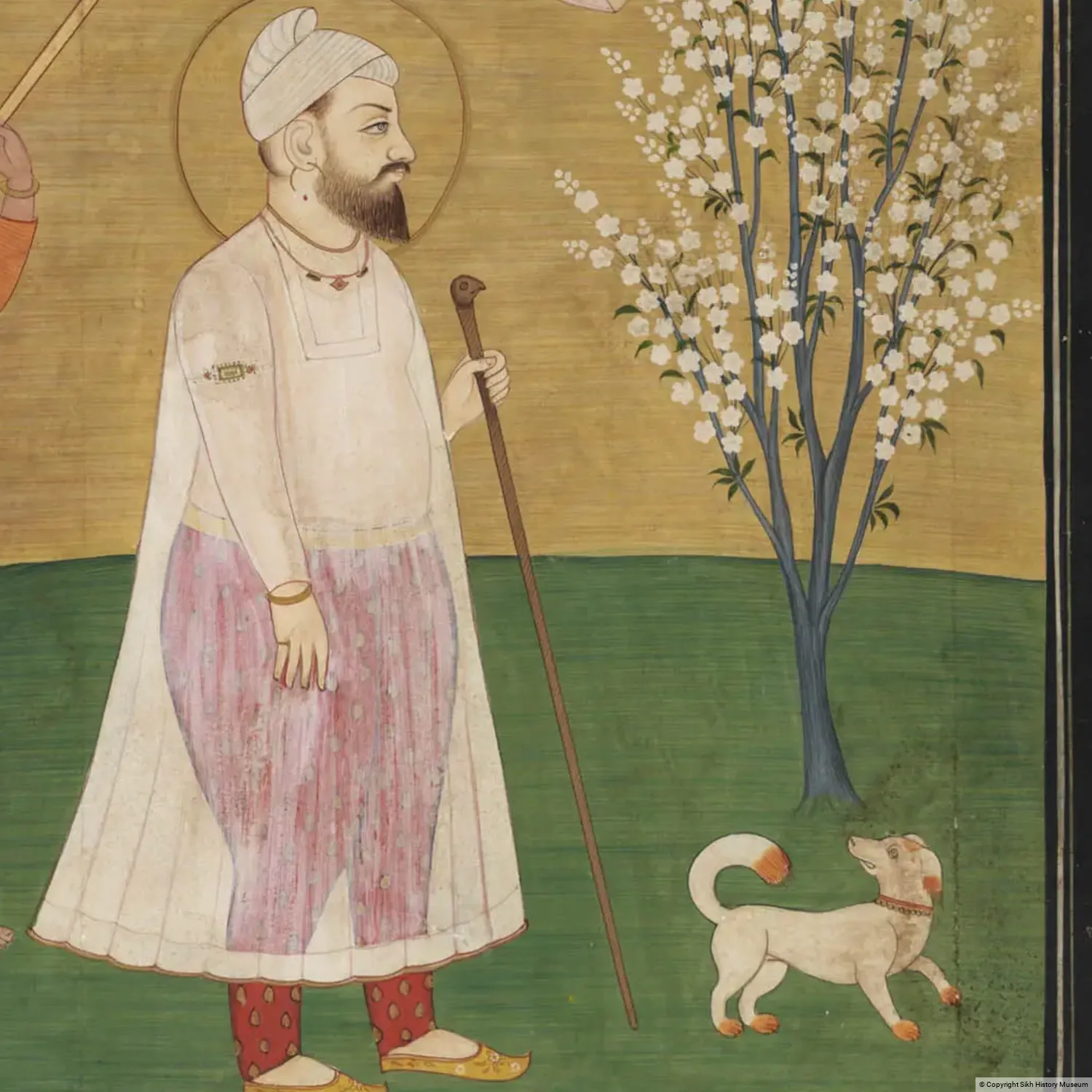
The Seventh Guru
1644
Guru Harrai (1630-1661) is anointed Guru. An apt statesman, the Guru keeps peace during a politically unstable period while retaining his cavalry force.
The Seventh Guru
1661
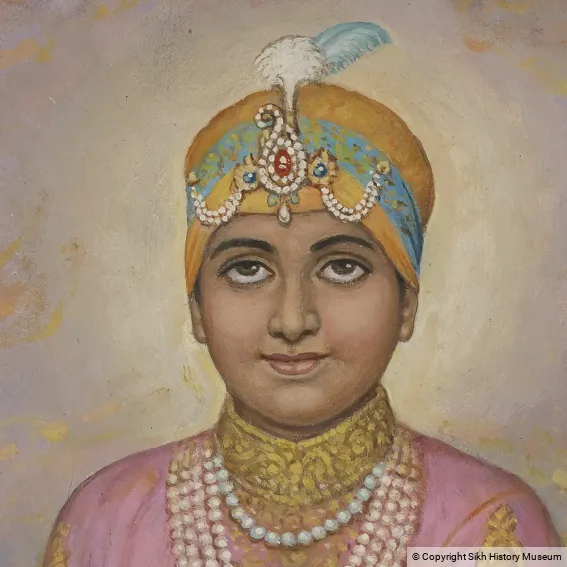
The Eighth Guru
1661
Guru Harkrishan (1656-1664) anointed as Guru. At a young age he died of smallpox, visiting those infected to comfort them during their illness.
The Eighth Guru
1664
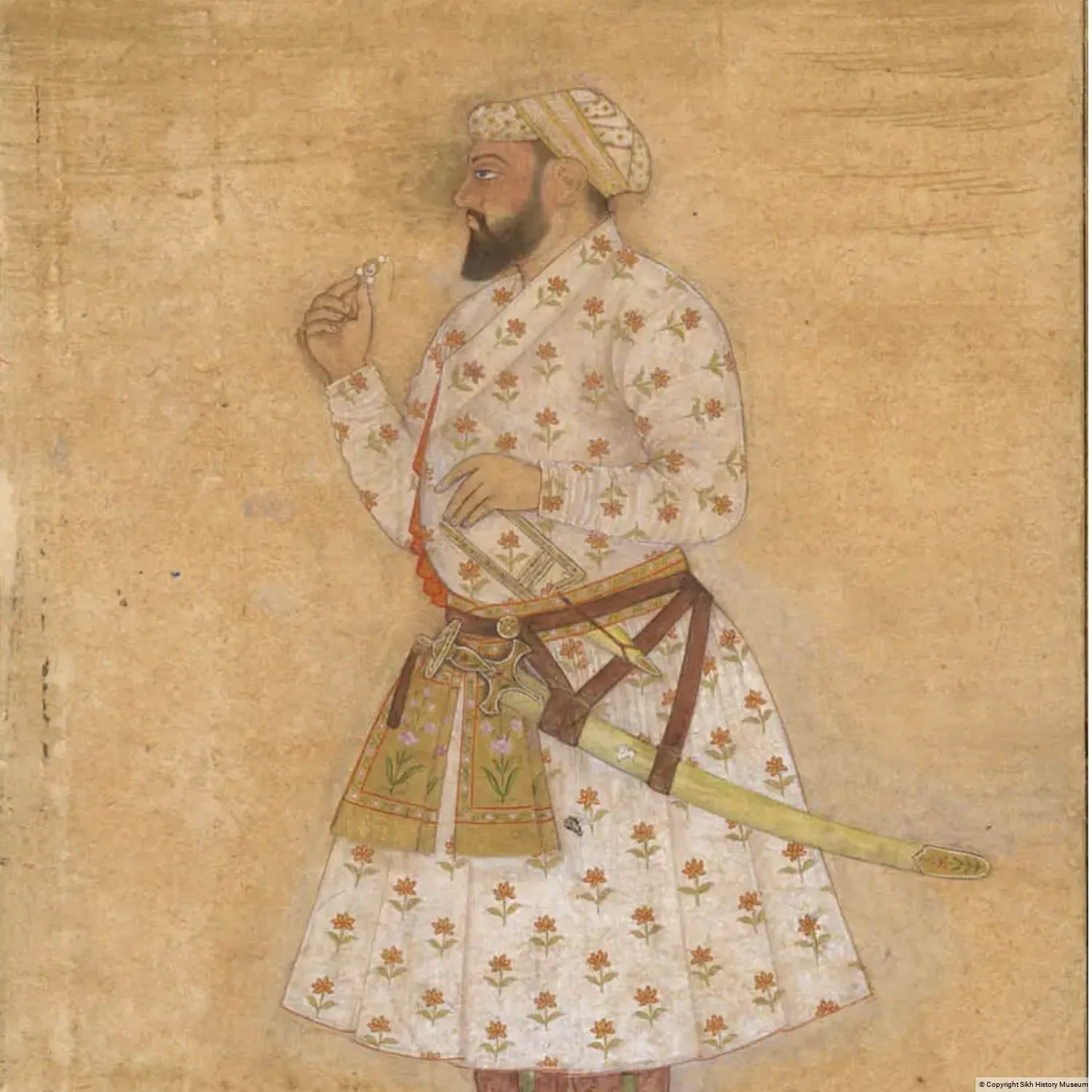
The Ninth Guru
1664
Guru Tegh Bahadur (1621-1675) anointed Guru, traveling extensively throughout South Asia while writing poetry which would be included in the Guru Granth Sahib.
The Ninth Guru
1675
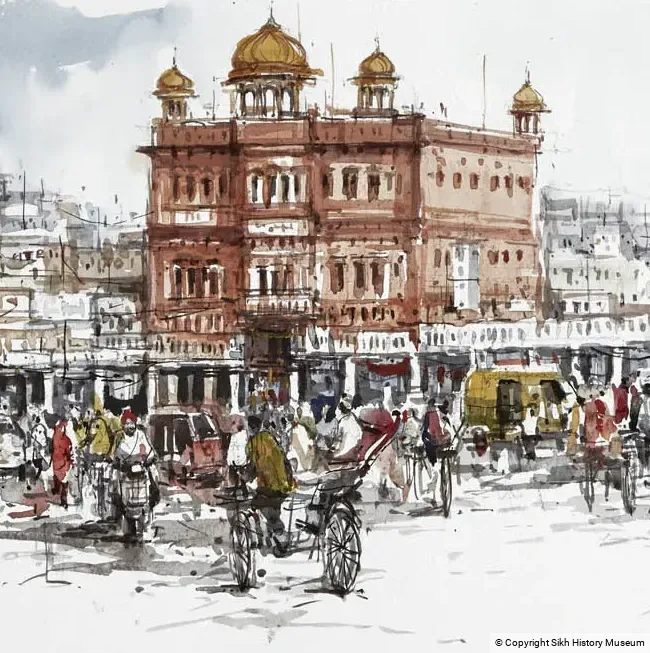
Martyrdom of Guru Tegh Bahadur
1675
Guru Tegh Bahadur, advocating for religious freedom, was executed in Delhi by the orders of the Mughal Emperor Aurangzeb.
Martyrdom of Guru Tegh Bahadur
1675
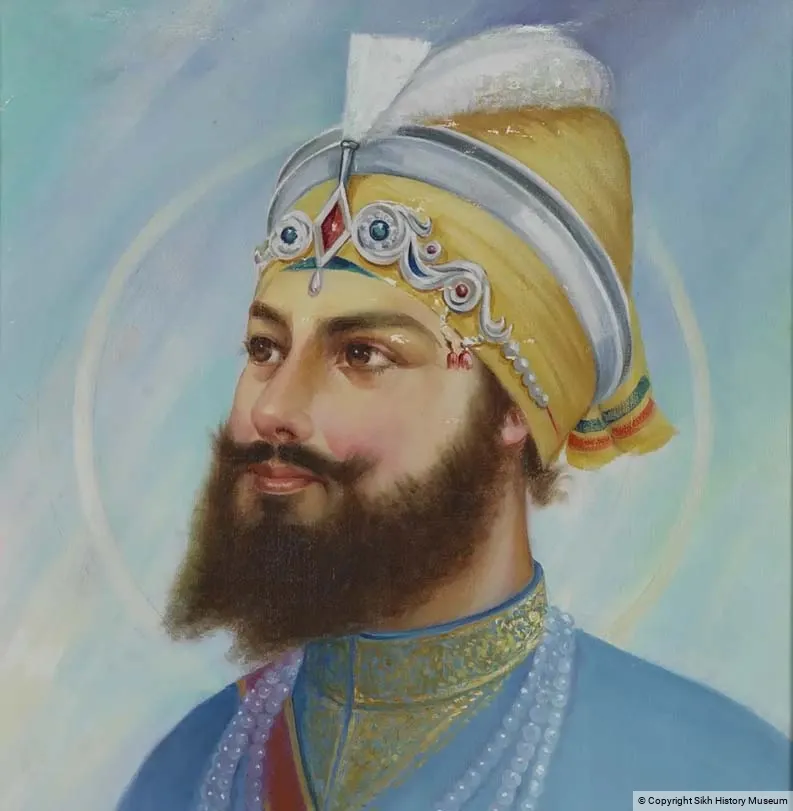
The Tenth Guru
1675
Guru Gobind Singh (1666-1708) anointed Guru. A poet, philosopher and a warrior, militarized the Sikh’s further to defend the population from oppression.
The Tenth Guru
1699
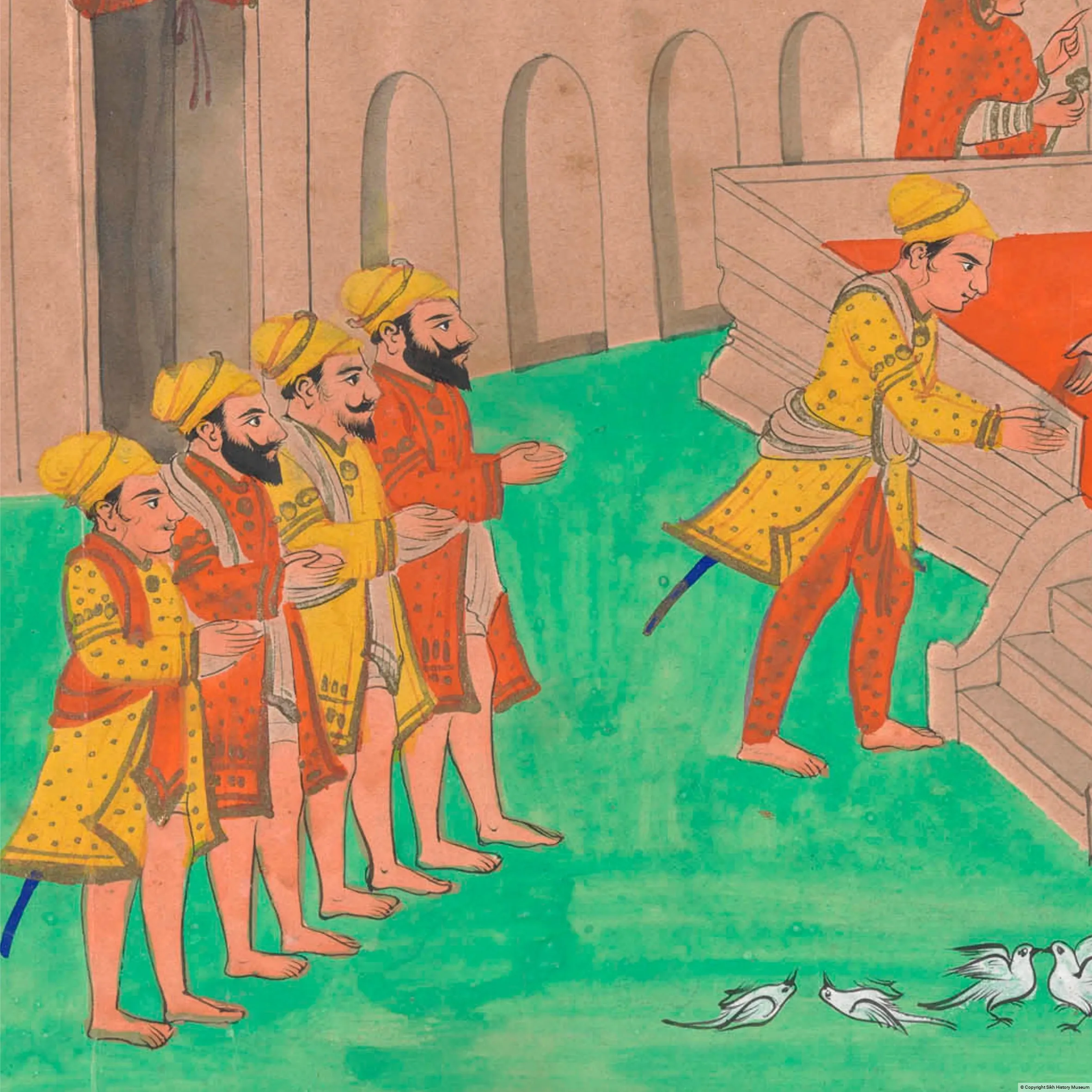
The Khalsa
1699
The Khalsa, a brotherhood of martial Sikhs, was created by Guru Gobind Singh with the five K’s established as their symbols.
The Khalsa
1700
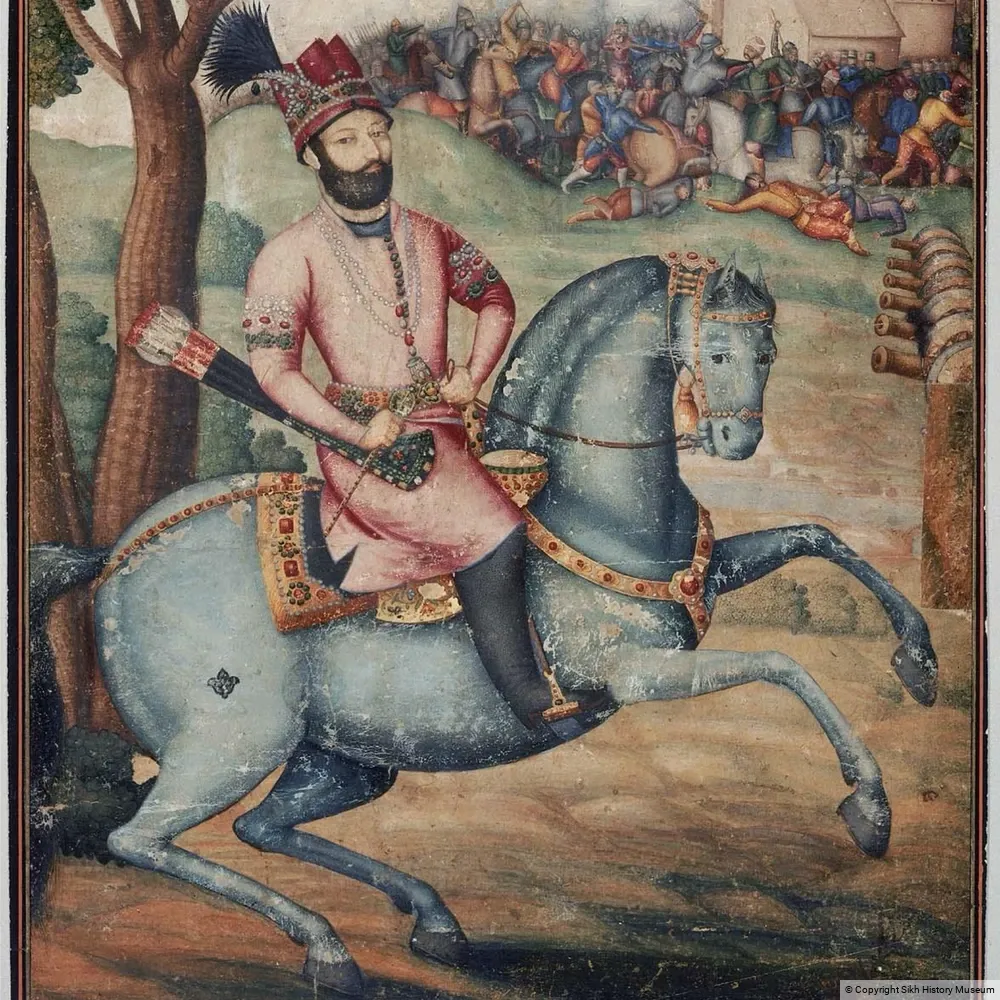
Western Invasions
1700
Since the 8th century, invasions from Persian (Nadir Shah), central Asia (Mughals), and Afghanistan (Ahmad Shah Abdali) have decimated Punjab & North India.
Western Invasions
1704
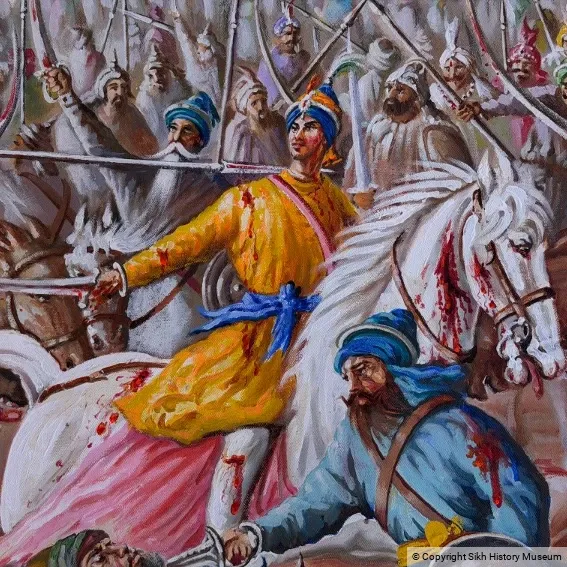
Martyrdom of Younger Princes
1704
The two younger sons of Guru Gobind Singh, aged 7 and 5, obtained martyrdom defiantly refusing to convert to Islam.
Martyrdom of Younger Princes
1704
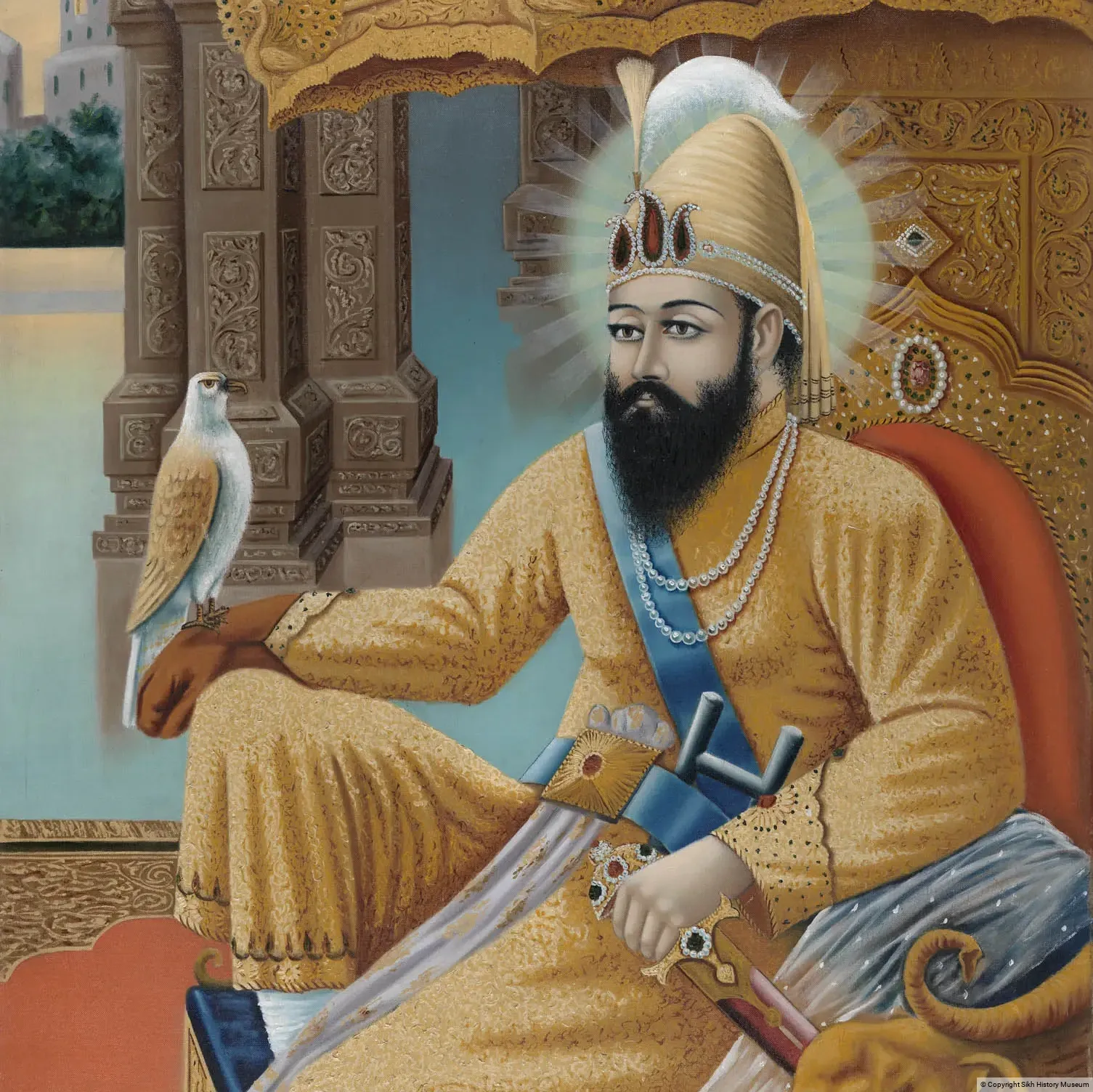
Martyrdom of Older Princes
1704
The eldest two sons of Guru Gobind Singh obtain martyrdom fighting heroically against the injust Mughal army at the Fort of Chamkaur.
Martyrdom of Older Princes
1708
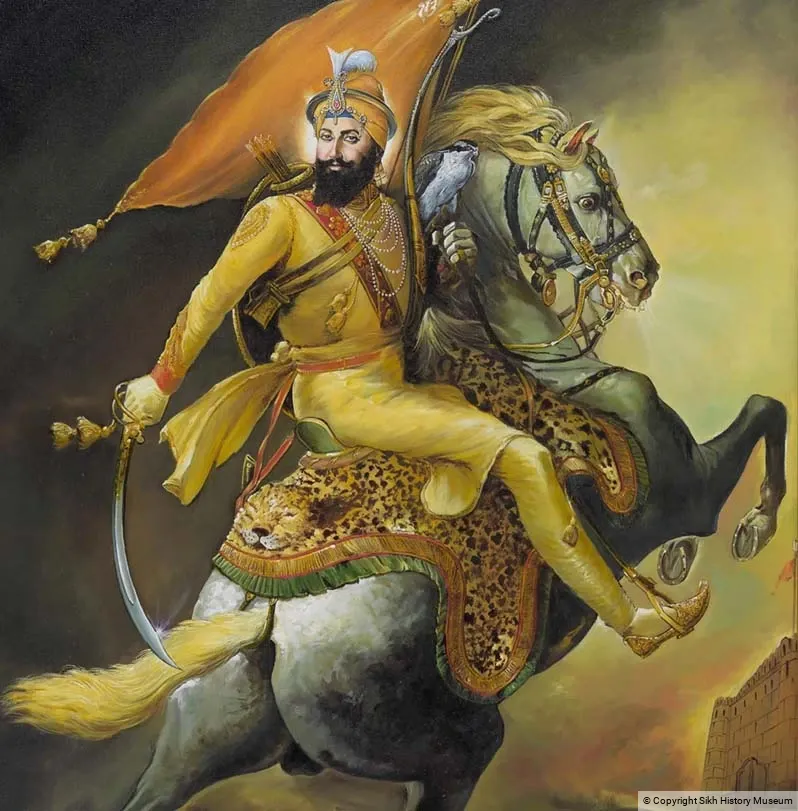
The Collective Khalsa
1708
Guru Gobind Singh bestows temporal (worldly and political) authority to the collective Khalsa community, instructing them to fight for freedom and justice.
The Collective Khalsa
1708
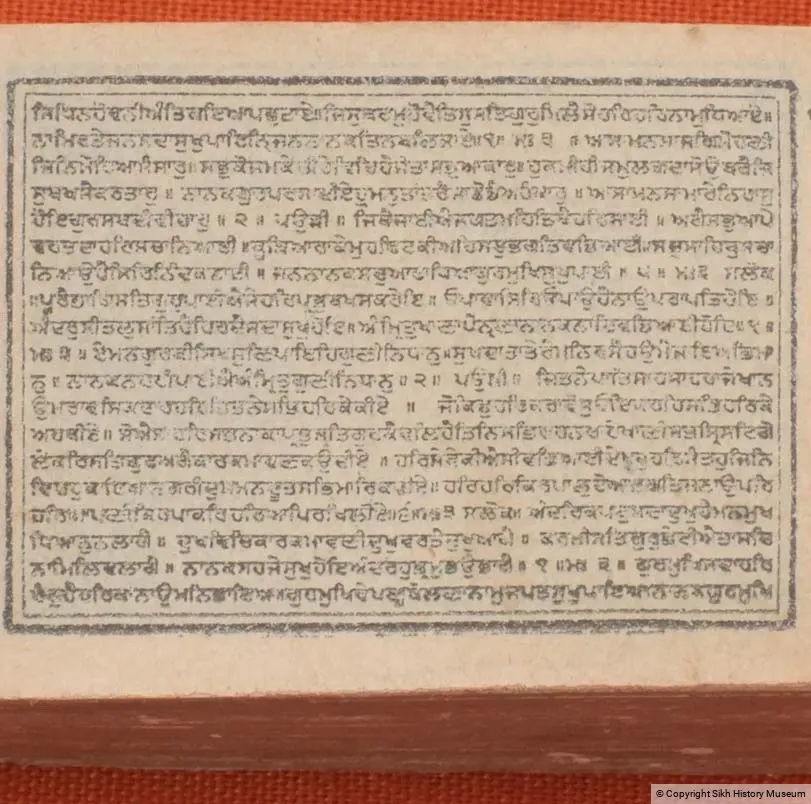
The Eternal Guru
1708
Guru Gobind Singh anoints the Guru Granth Sahib, the Sikh scripture, as the eternal Guru, to guide Sikhs following his passing.
The Eternal Guru
1710
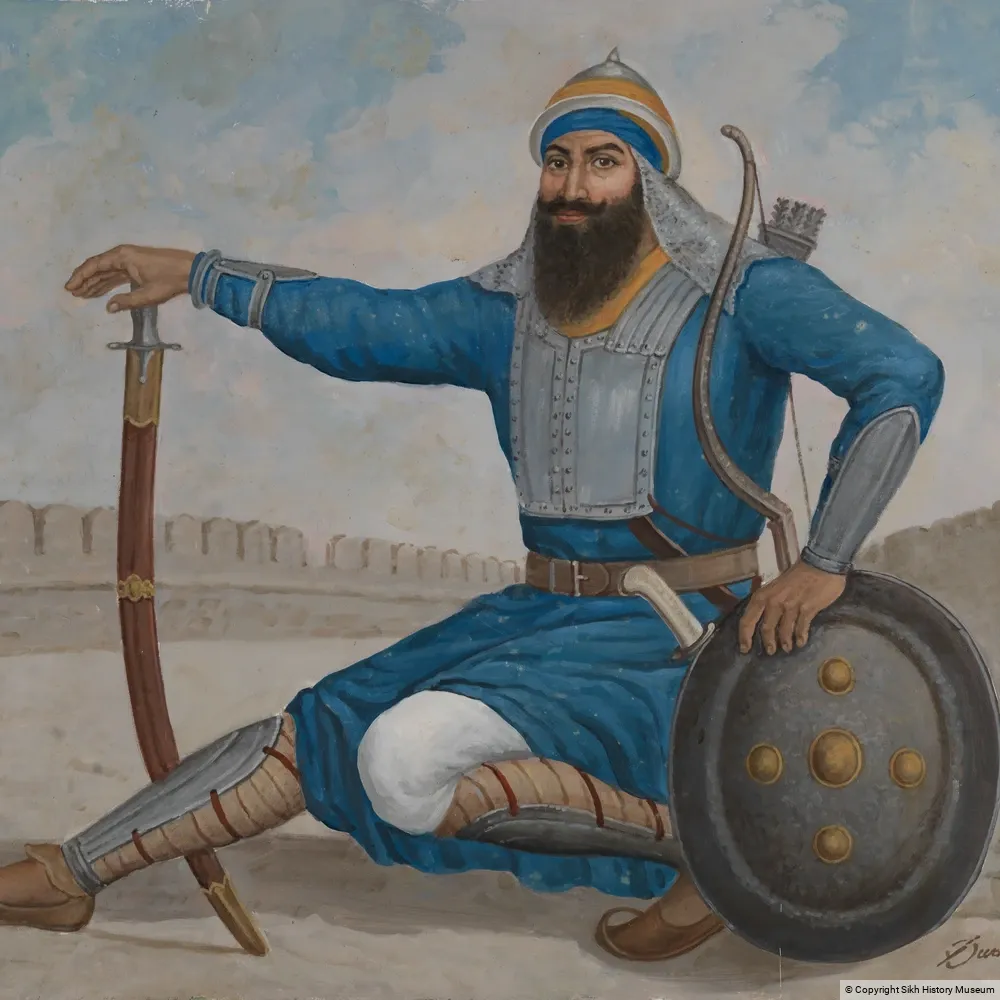
Khalsa Revolt
1710
Banda Bahadur (1670-1716) led a revolt in Punjab following the passing of Guru Gobind Singh, capturing the district of Sirhind.
Khalsa Revolt
1715
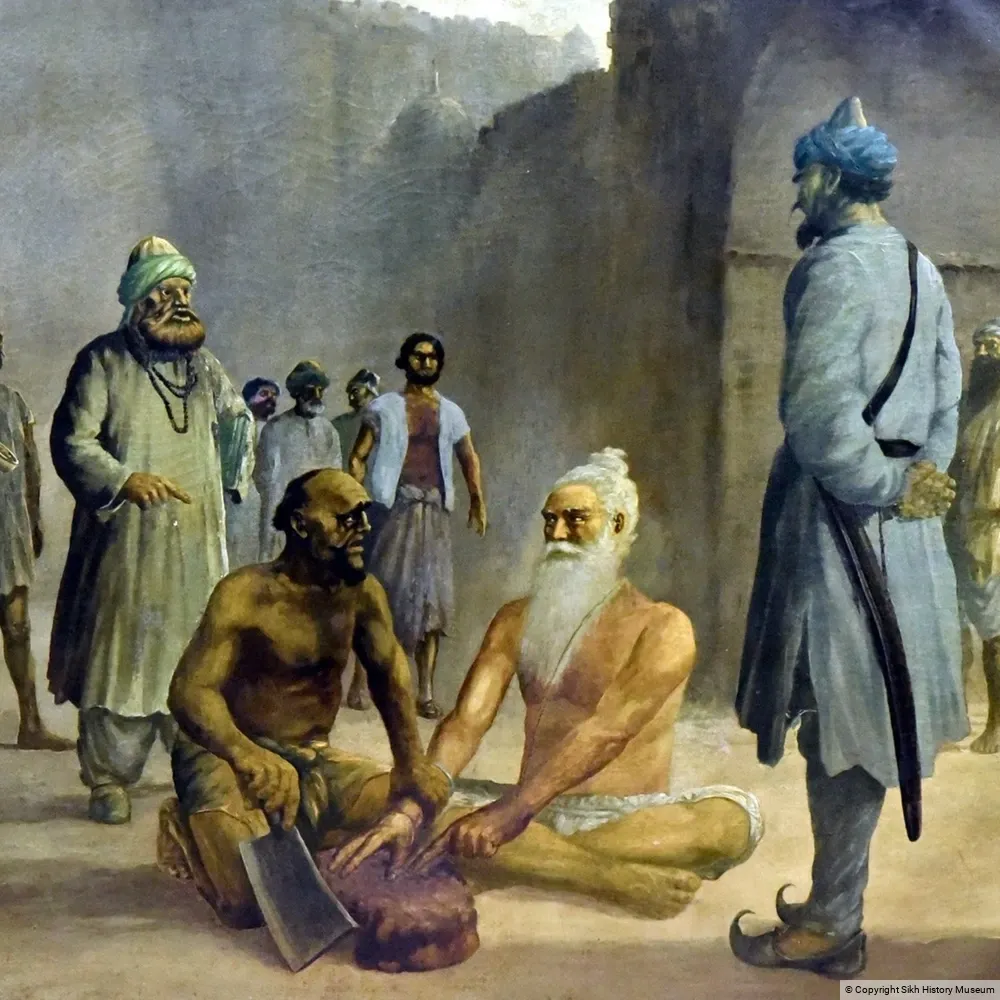
Mughal Injustice
1715
Bhai Mani Singh (1644-1738), Sikh community leader and scholar, is executed by the Mughal Lahore Court under false pretexts.
Mughal Injustice
1746
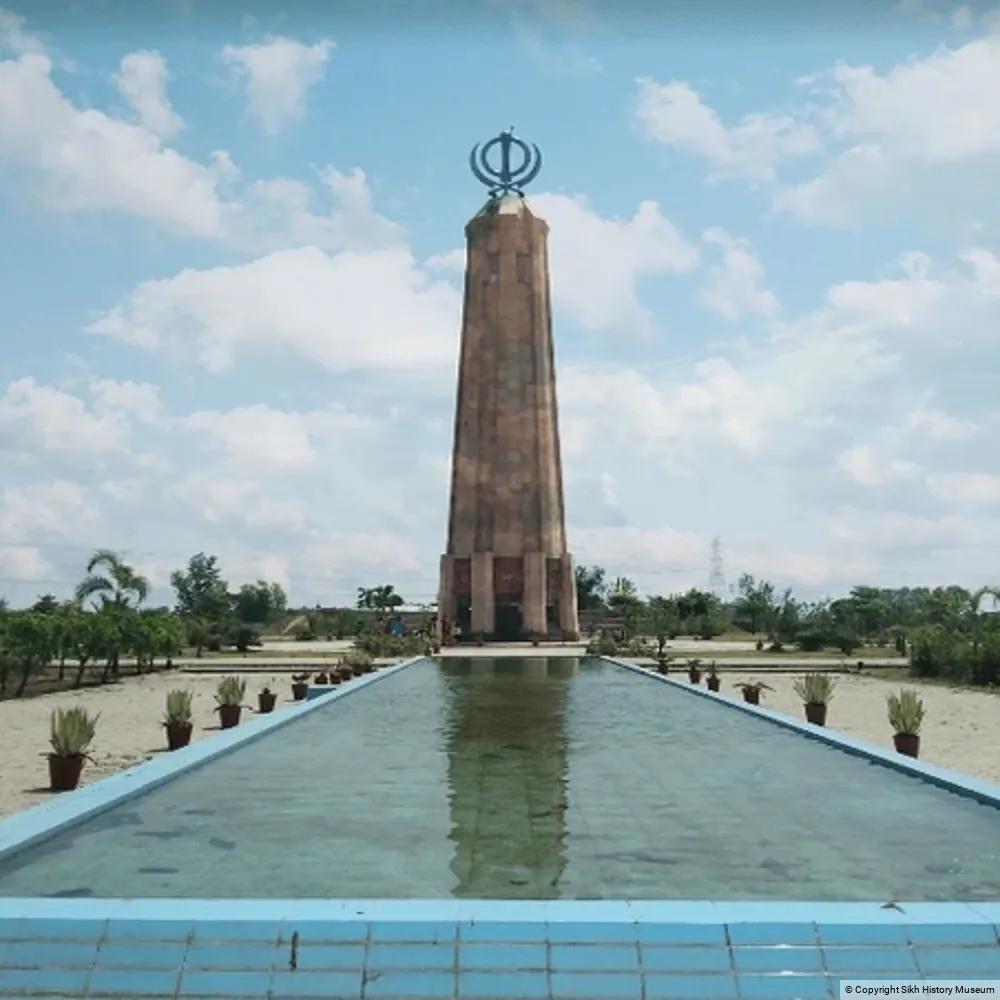
The Ghallughara's
1746
THE SMALL AND LARGE MASSACRES Known as the small and large Ghallugharas (massacres), tens of thousands of Sikhs were killed during two violent campaigns by Mughal's and Afghan's.
The Ghallughara's
1746-1762
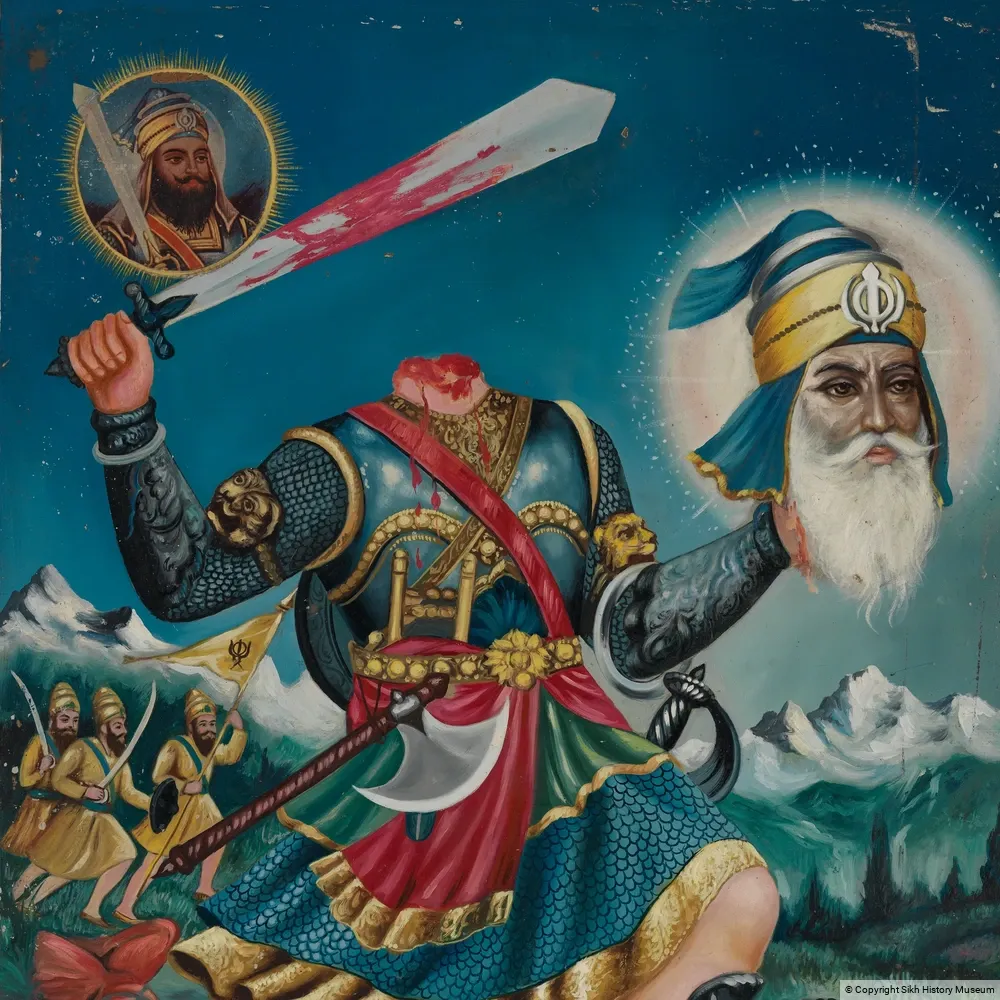
Headless Heroics
1746-1762
Afghan invader Ahmad Shah Abdali desecrated the Harmandir, Baba Deep Singh (1682-1757) obtained martyrdom (shahīdī) in this battle, to evict the Afghans.
Headless Heroics
1757
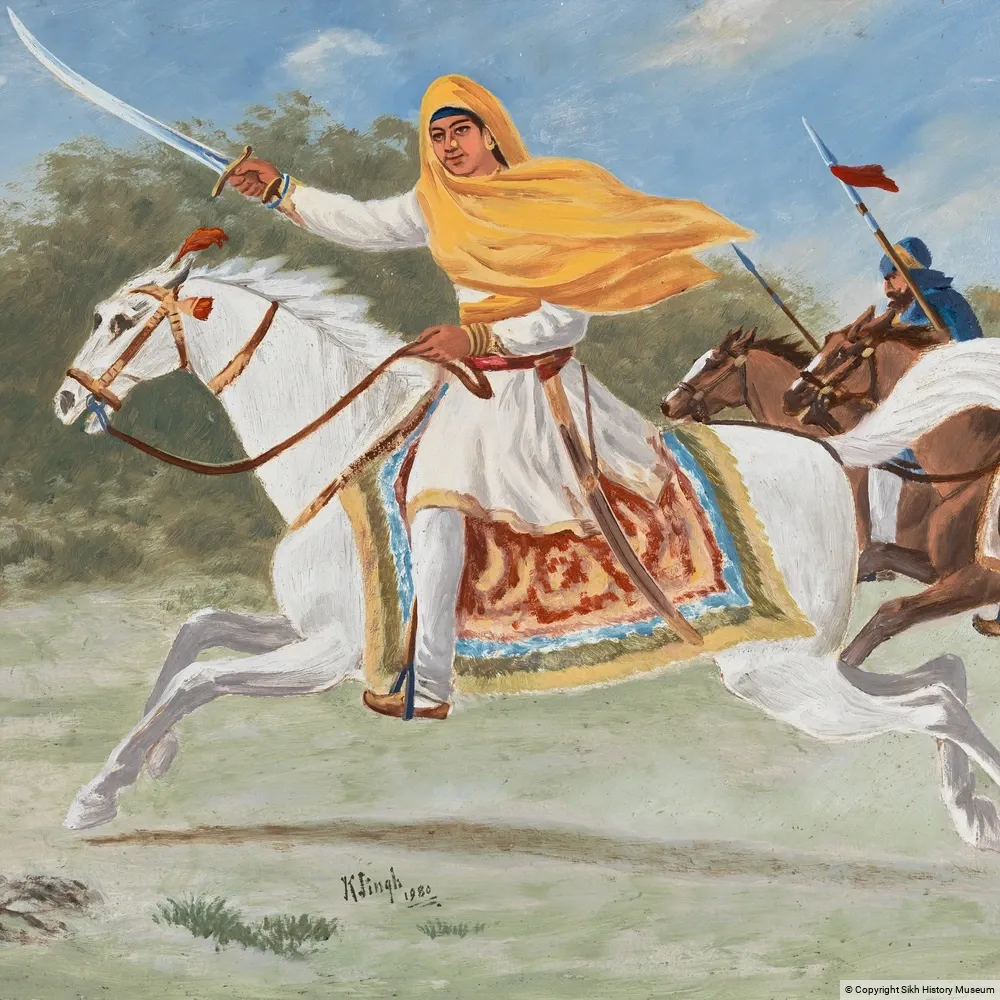
Sikh Women
1757
Birth of Sada Kaur, a seasoned general, she was the mentor and mother-in-law of Maharaja Ranjit Singh and the wife of Gurbaksh Singh, the leader of the Kanhaiya misl.
Sikh Women
1760-1780
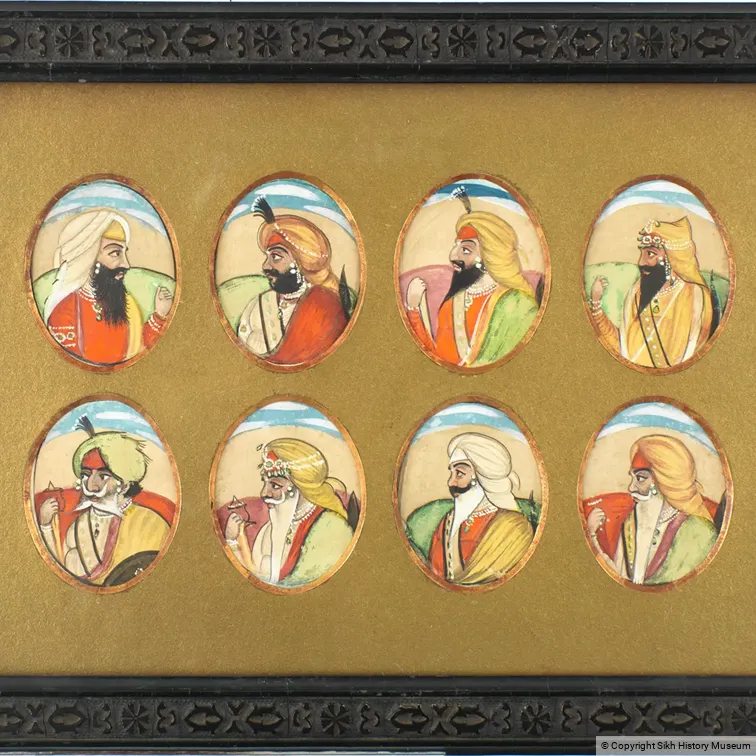
A Leader Emerges
1760-1780
A young Ranjit Singh, at the age of 12, takes control of the Shukarchakia Missal after his father (Maha Singh's) death.
A Leader Emerges
1762
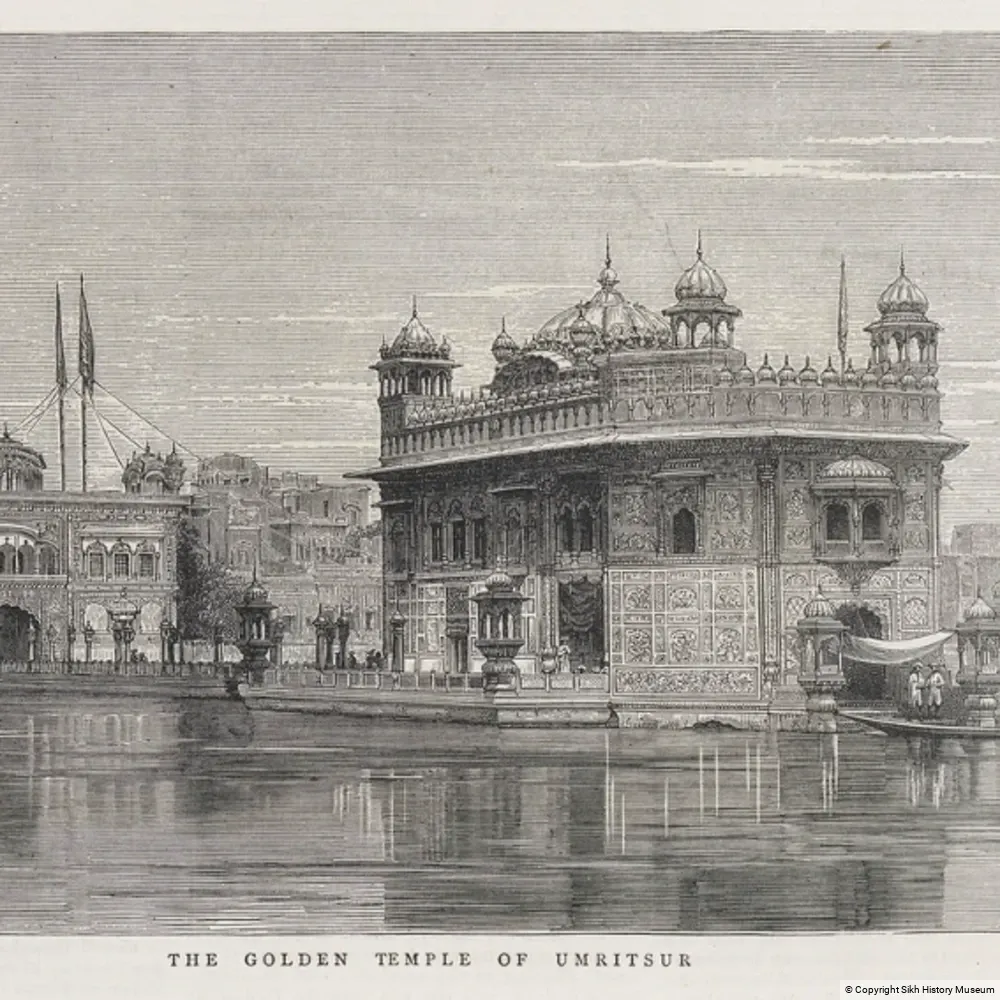
Rebuilding Harimandar
1762
Sikh principalities, known as missals, emerged and collectively recaptured and rebuilt the Harmandar Sahib.
Rebuilding Harimandar
1764
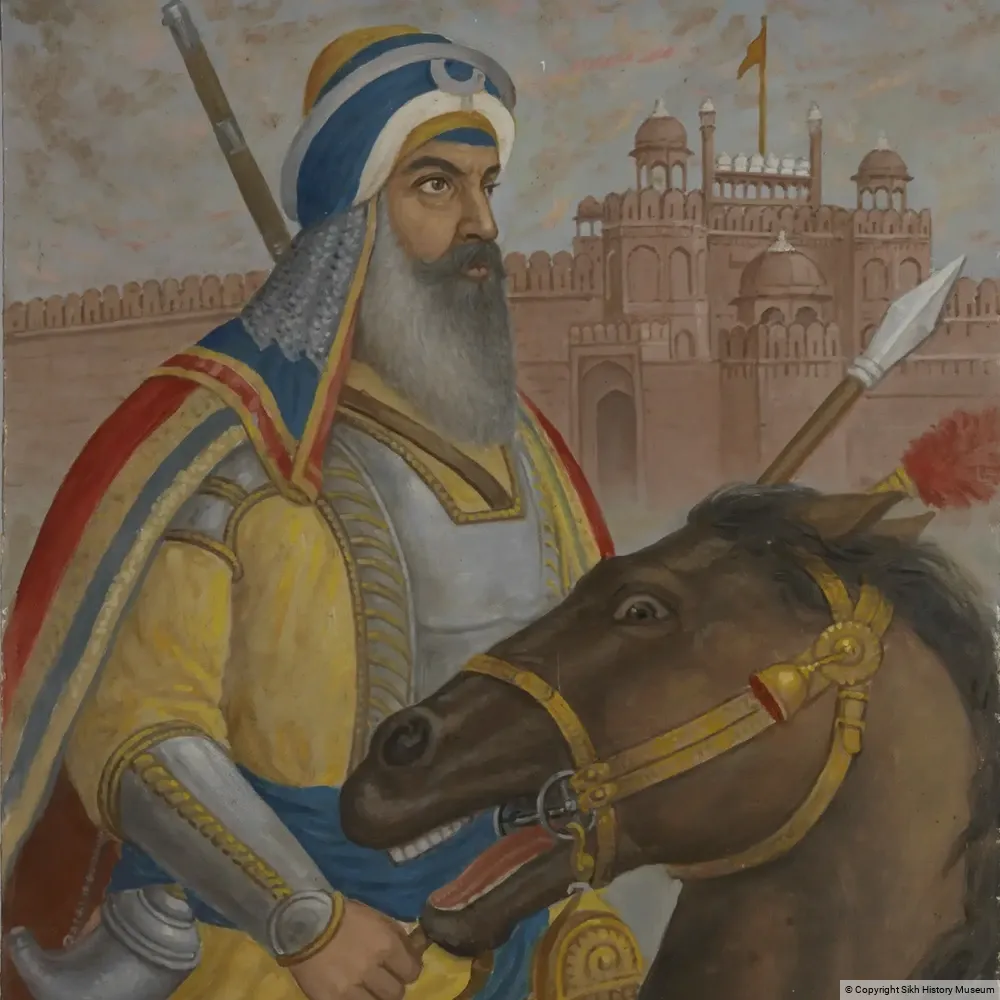
Sikhs Conquering Punjab
1764
Over the course of twenty years, Sikh warbands (missals) conquered various parcels of land in Punjab, building Gurdwaras in memory of the Sikh Gurus.
Sikhs Conquering Punjab
1799
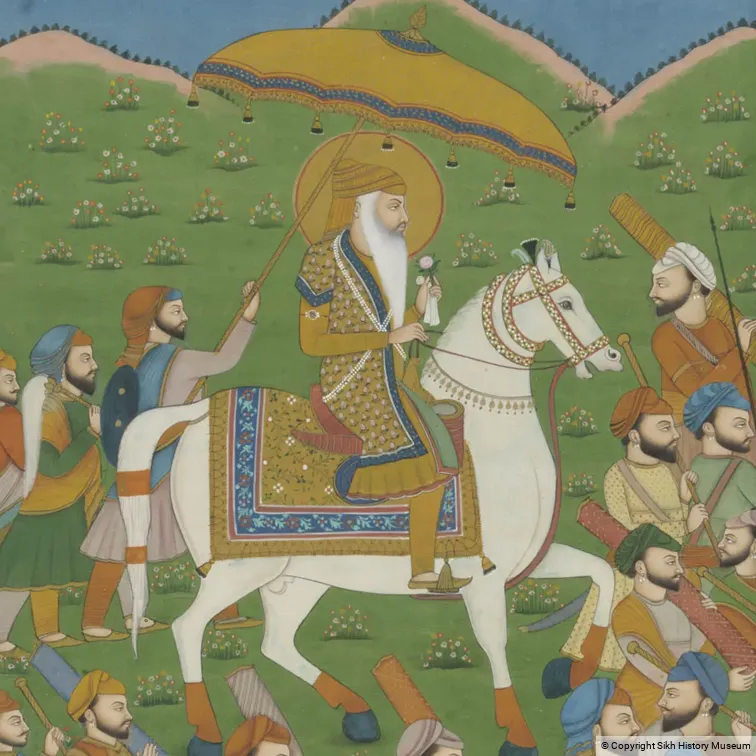
Sikh Kingdom
1799
Ranjit Singh established a large kingdom that extended from Kabul in the west, Sutlej river in the east, Ladakh in the north and Rajasthan in the south.
Sikh Kingdom
1799
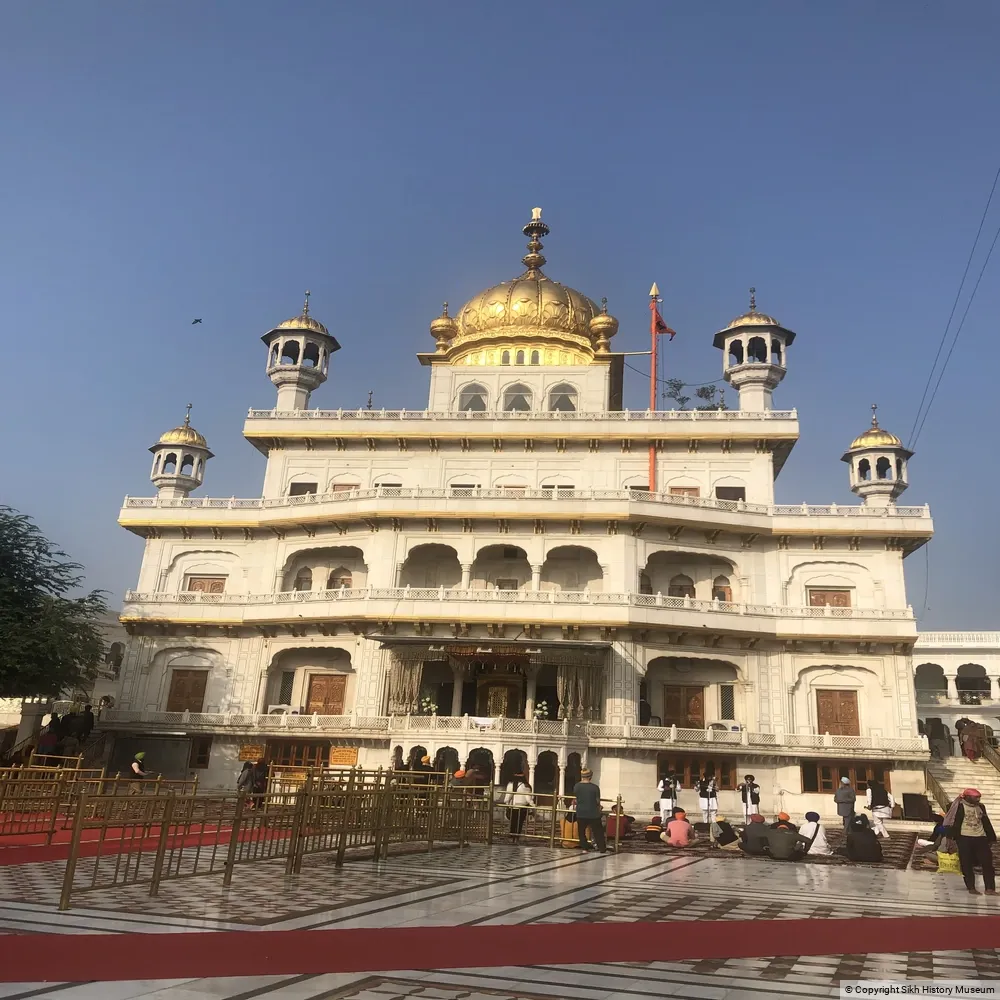
Equal Justice
1799
Akal Takht custodian Akali Phula Singh awards a penalty to Maharaja Ranjit Singh for keeping a Muslim concubine – the Maharaja graciously accepted the punishment.
Equal Justice
1800
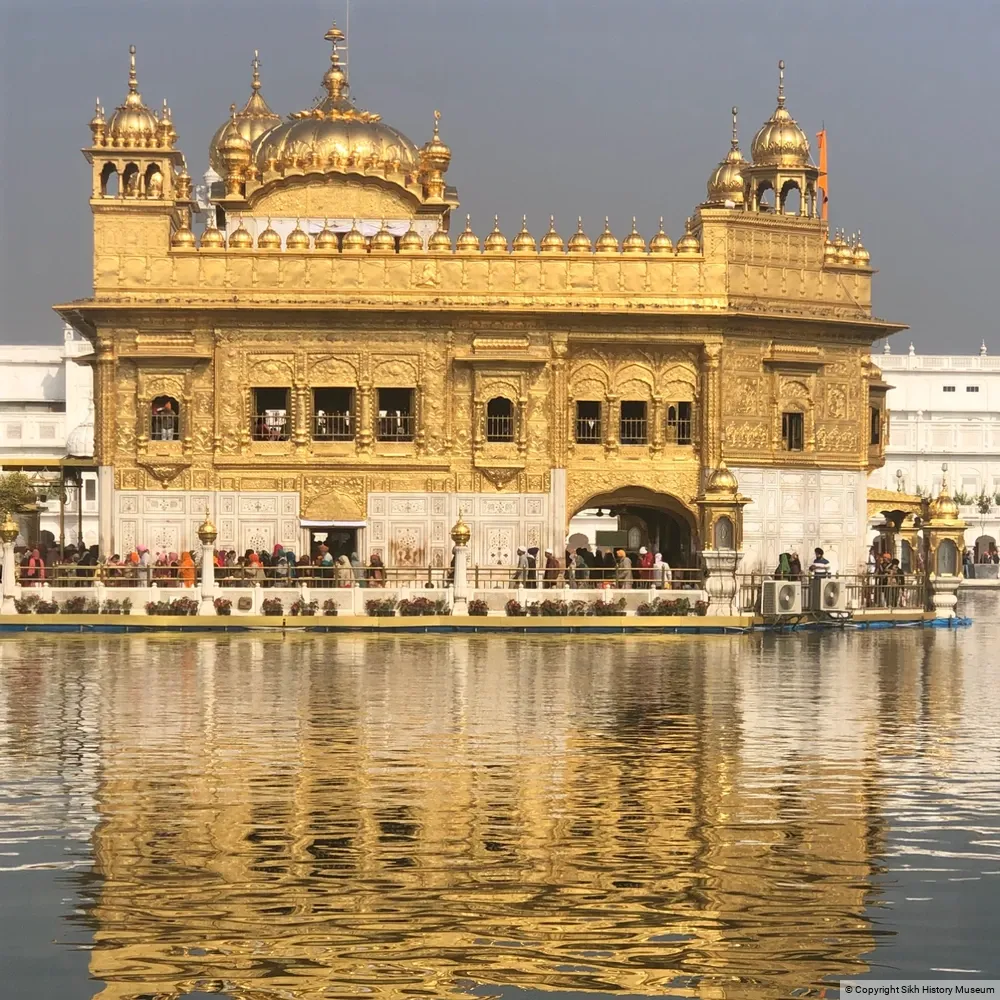
Harimandar Becomes Golden
1800
Maharaja Ranjit Singh adds gold plating to the exterior of the upper level of the Harmandir Sahib and marble to the interior and the walkways.
Harimandar Becomes Golden
1839
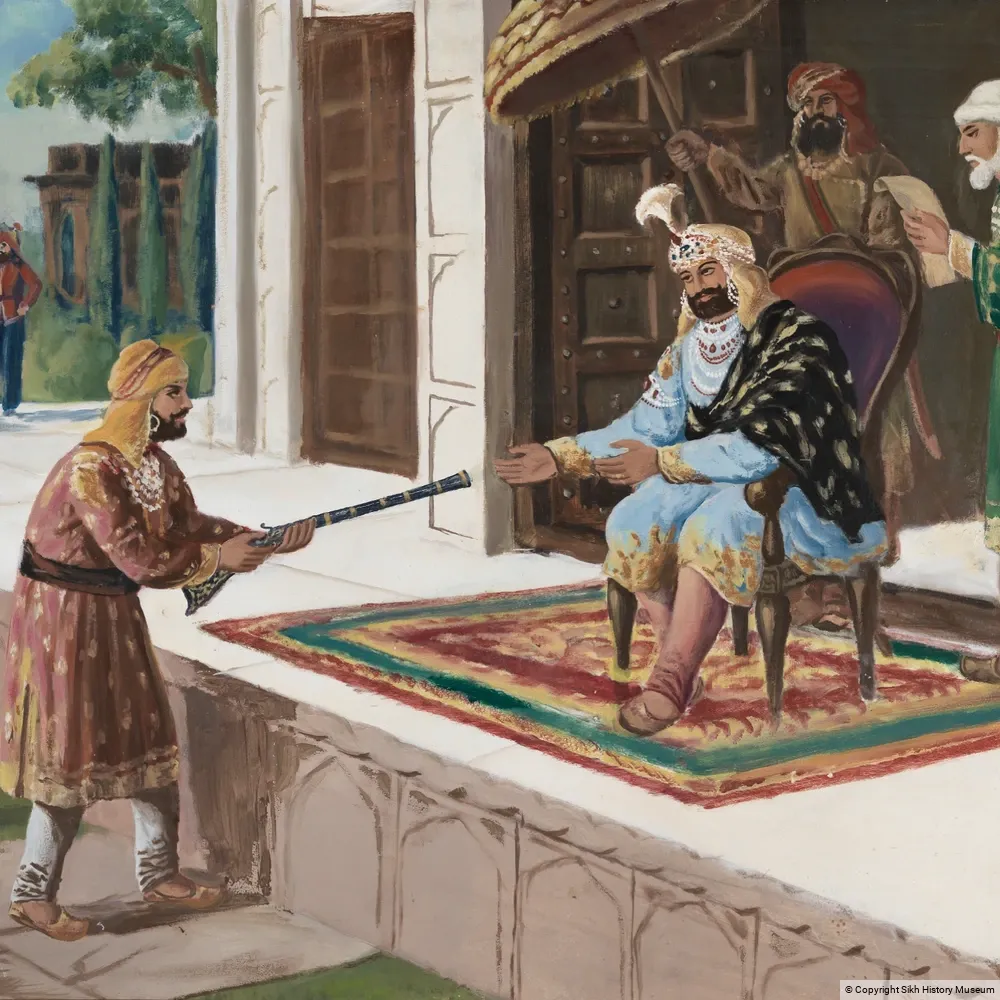
Death of the Maharaja
1839
Maharaja Ranjit Singh dies and the infighting and deceit amongst his former confidants and his heirs, leads to the fall of the Sikh kingdom in 10 years.
Death of the Maharaja
1845-1849
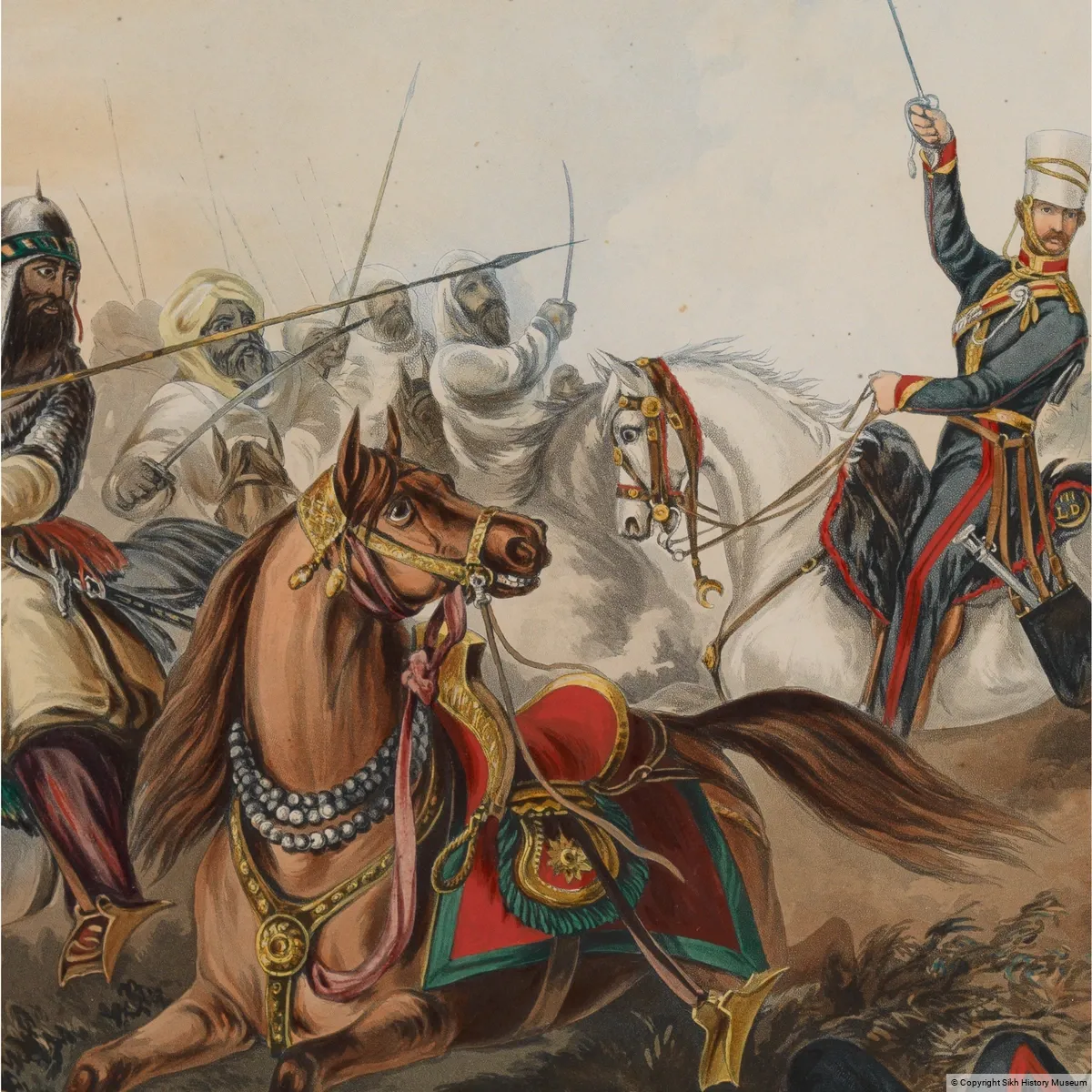
Exiling the Maharaja
1845-1849
Dalip Dingh, the son of Maharaja Ranjit Singh, deposed and exiled to London, becomes the first Sikh immigrant to England. JINDAN. BAMBA COLLECTION.
Exiling the Maharaja
1873
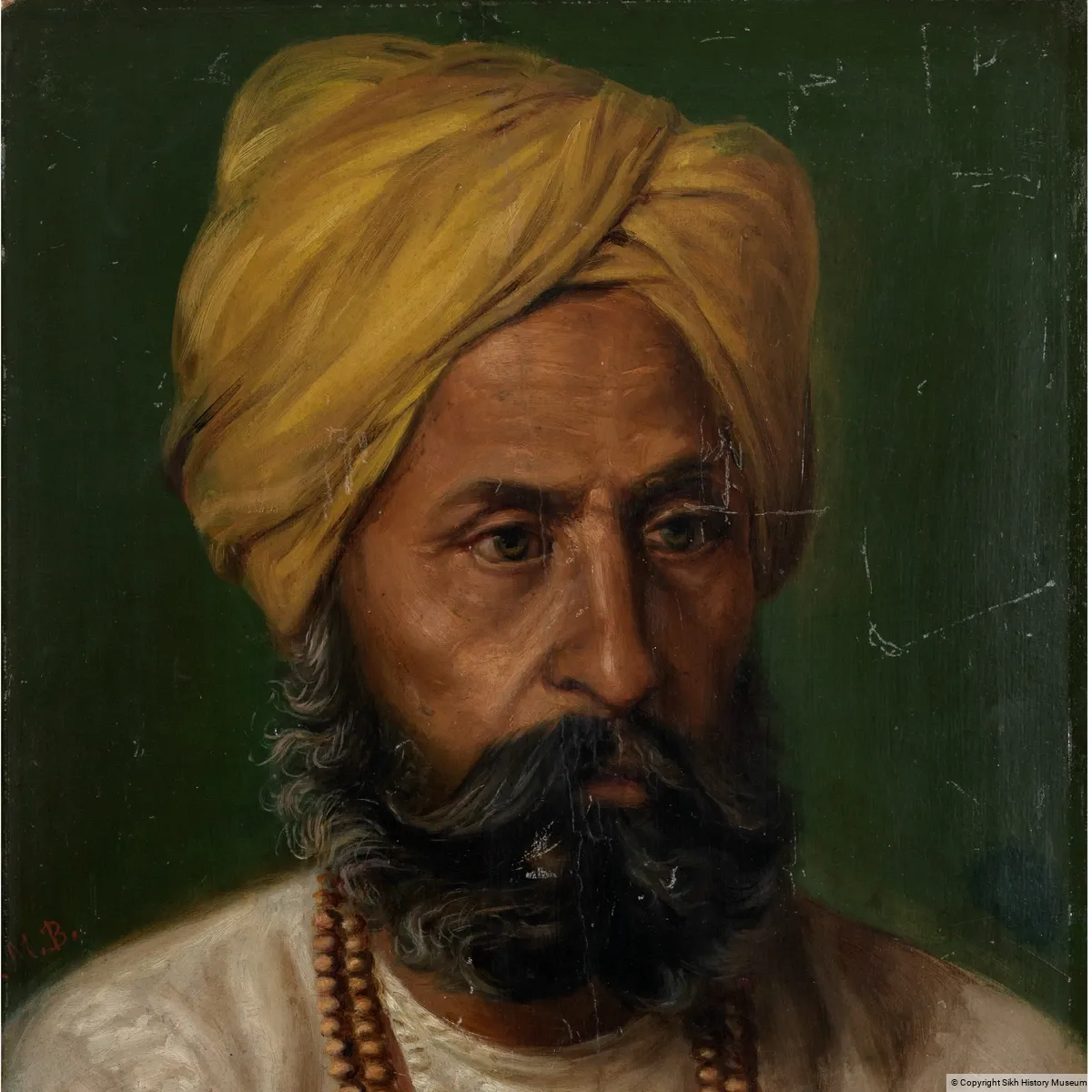
Defining Sikh Identity
1873
Singh Sabha is founded in Amritsar, a reform movement dedicated to consolidating Sikh traditions and preaching a distinct Sikh tradition.
Defining Sikh Identity
1891
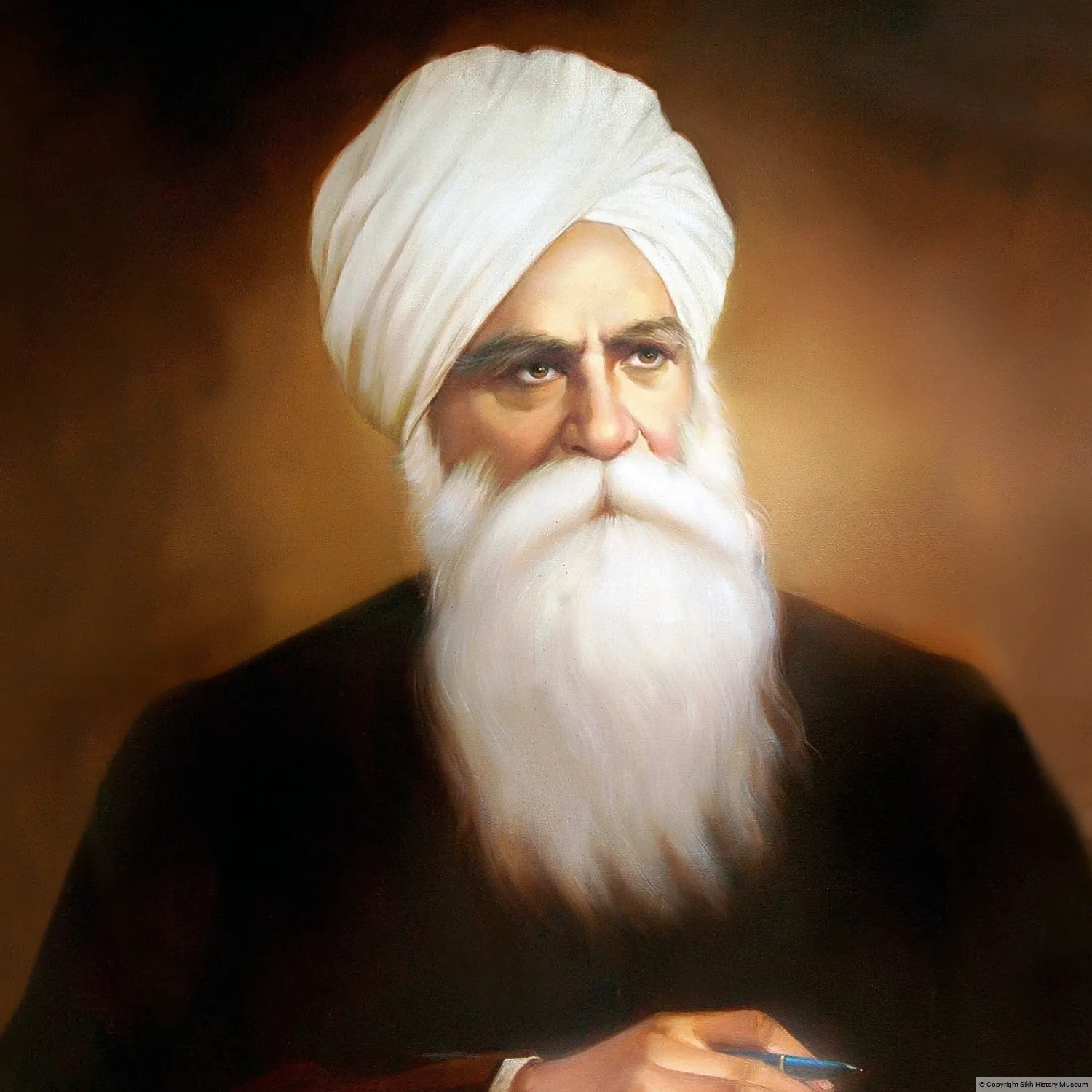
Sikh Press
1891
Bhai Vir Singh opens his first press, Wazir-i-Hind, with his friend Wazir Singh. This begins literary projects like the Khalsa Tract Society (1894), and then Khalsa ...read more
Sikh Press
1897
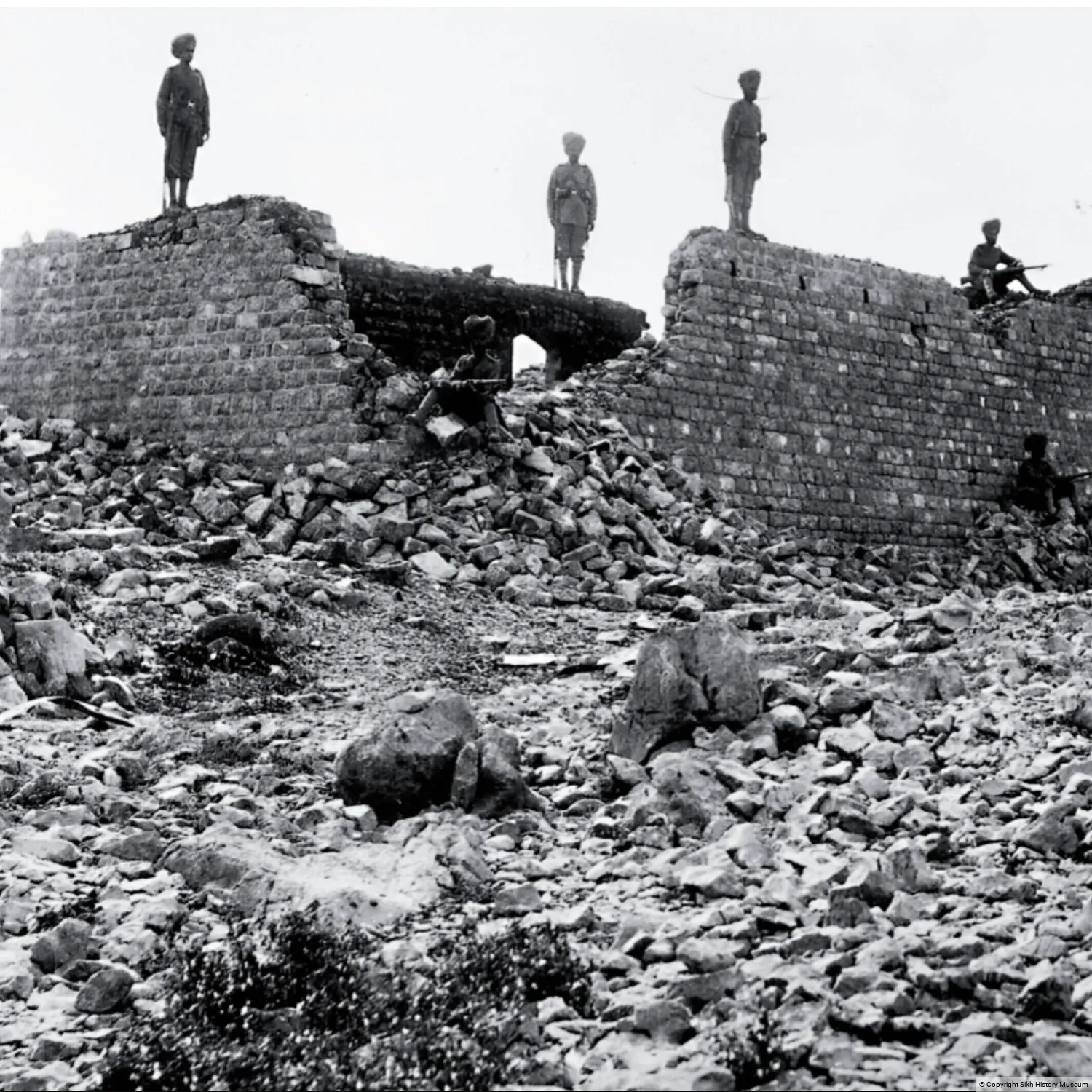
Battle of Saragarhi
1897
Twenty-one Sikh soldiers hold off tens of thousands of Afghan and Pashtun attackers, fighting to the last man heroically.
Battle of Saragarhi
1908-1912
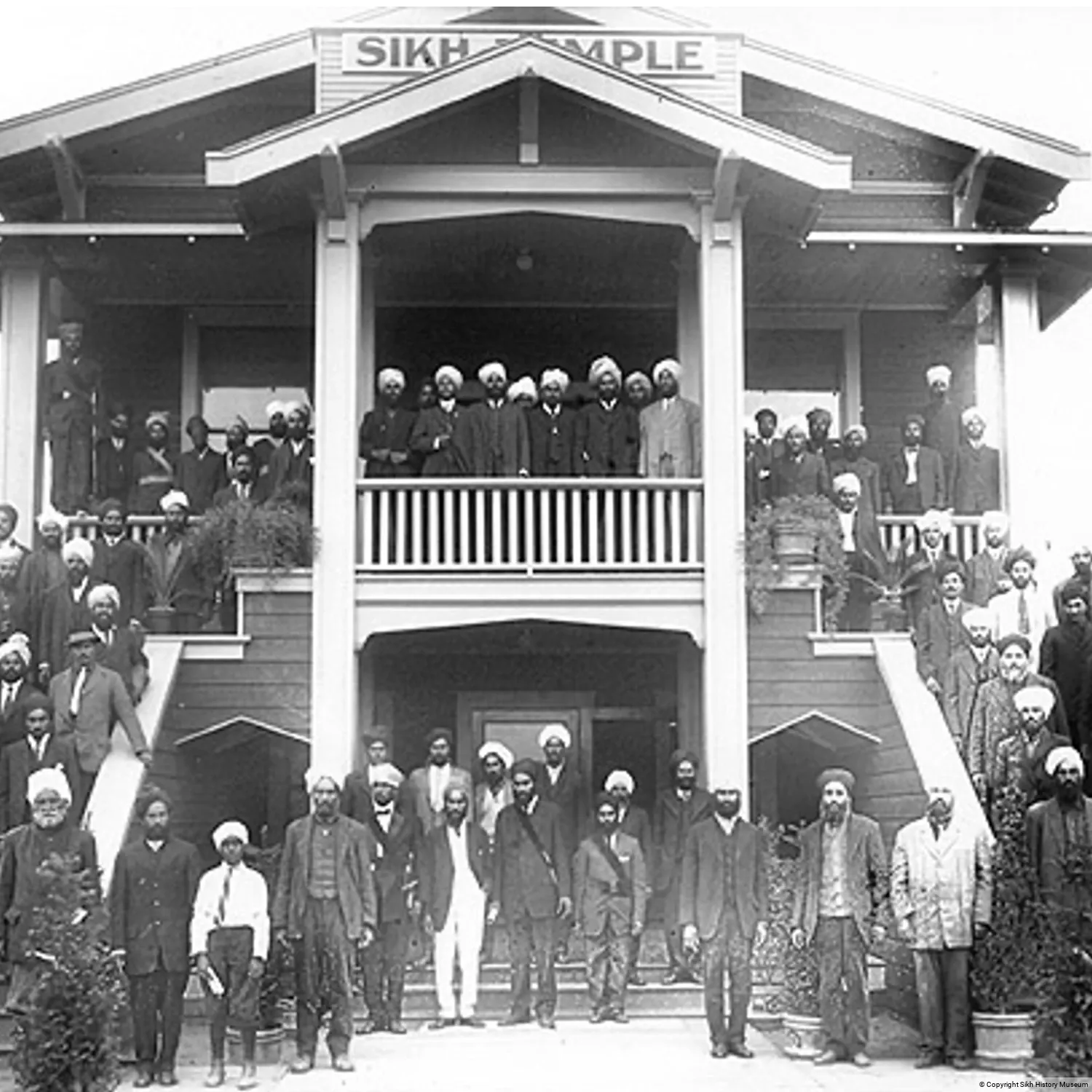
Sikhs in UK and USA
1908-1912
First Gurdwara's built in the UK (Putney, London) and USA (Stockton, California). Canada's first Gurdwara built in Golden, British Columbia in 1905. By 1908, ...read more
Sikhs in UK and USA
1909
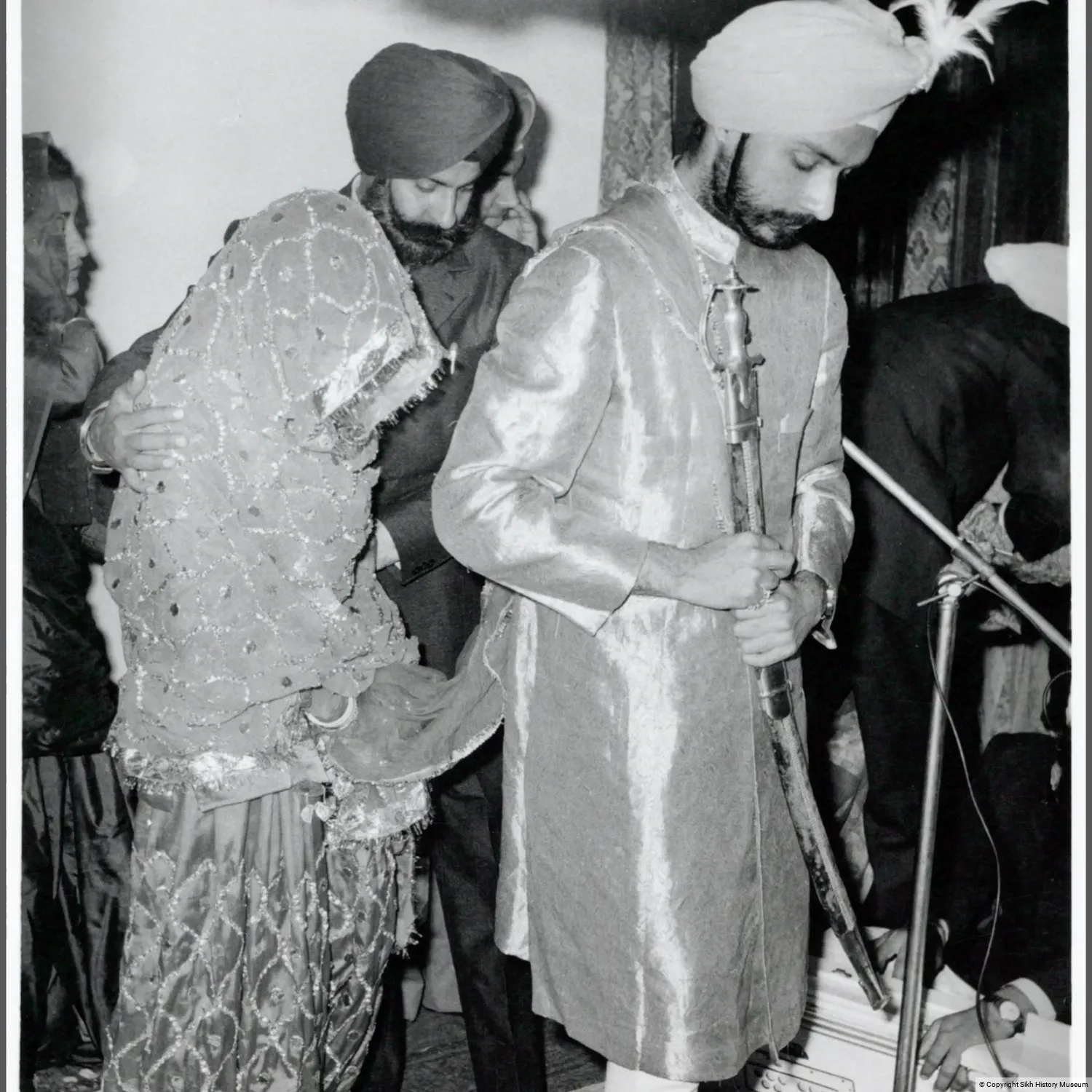
Sikh Marriage Act
1909
Anand Marriage Act passed by British rulers, reinforcing the Sikh’s own identity.
Sikh Marriage Act
1914-1918
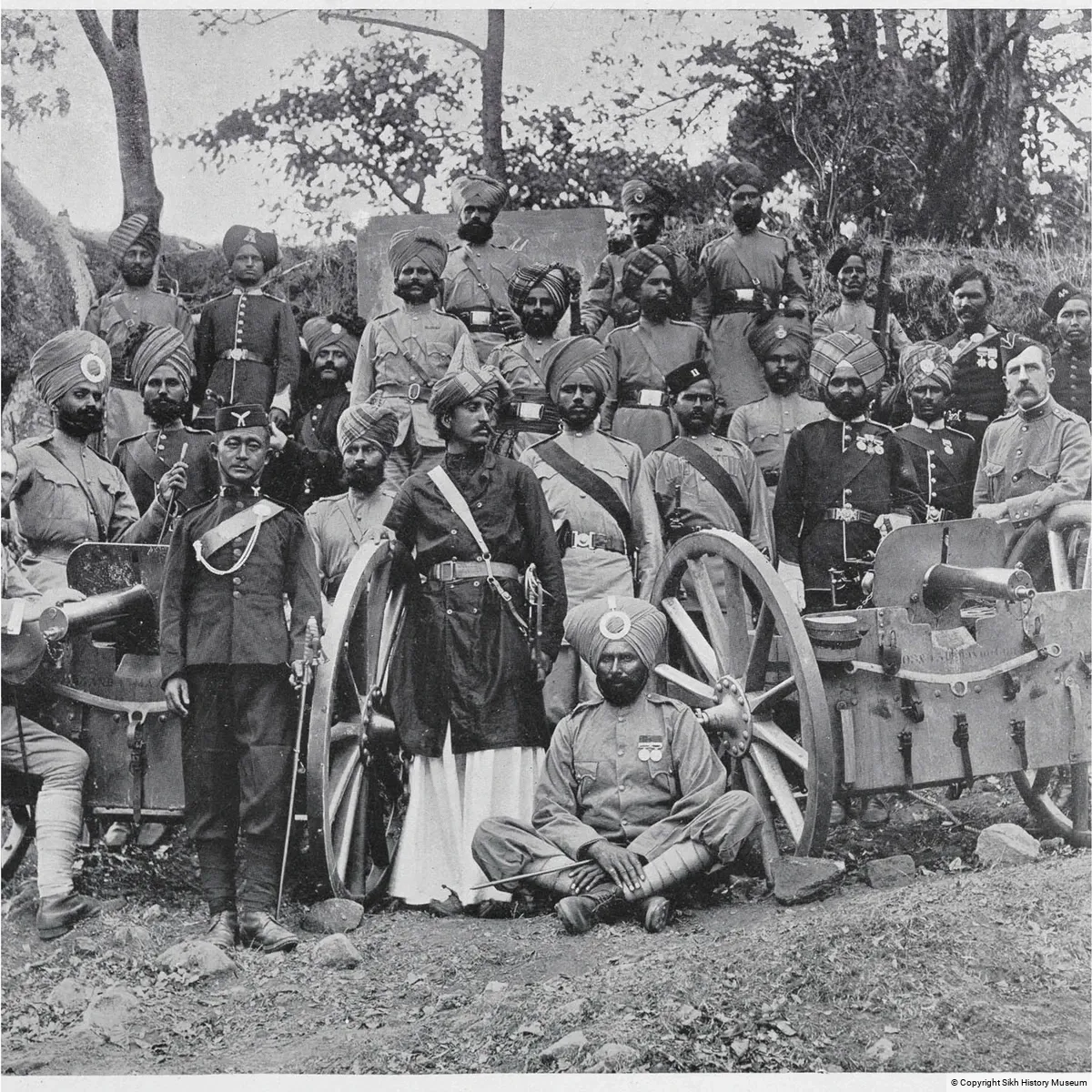
World War I
1914-1918
320,000 Sikhs served in World War 1 across multiple theatres of war, fighting in Flanders Field in France, across Europe, and in the Middle East.
World War I
1918
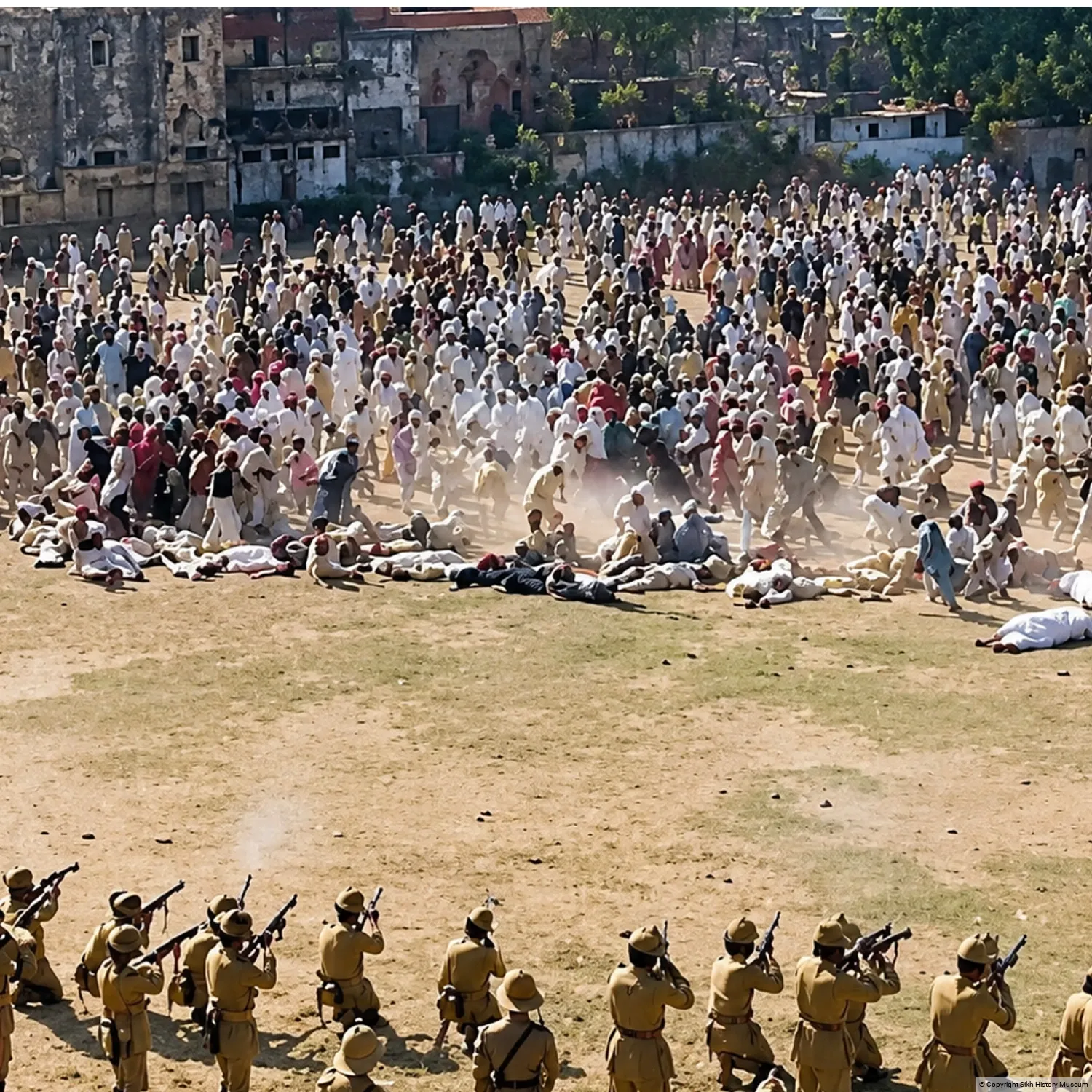
Amritsar (Jallianwala Bagh) Massacre
1918
British General Dyer ordered troops to fire at 20,000 peacefully protesting the Rowlatt Act. Thousands were killed and injured.
Amritsar (Jallianwala Bagh) Massacre
1920
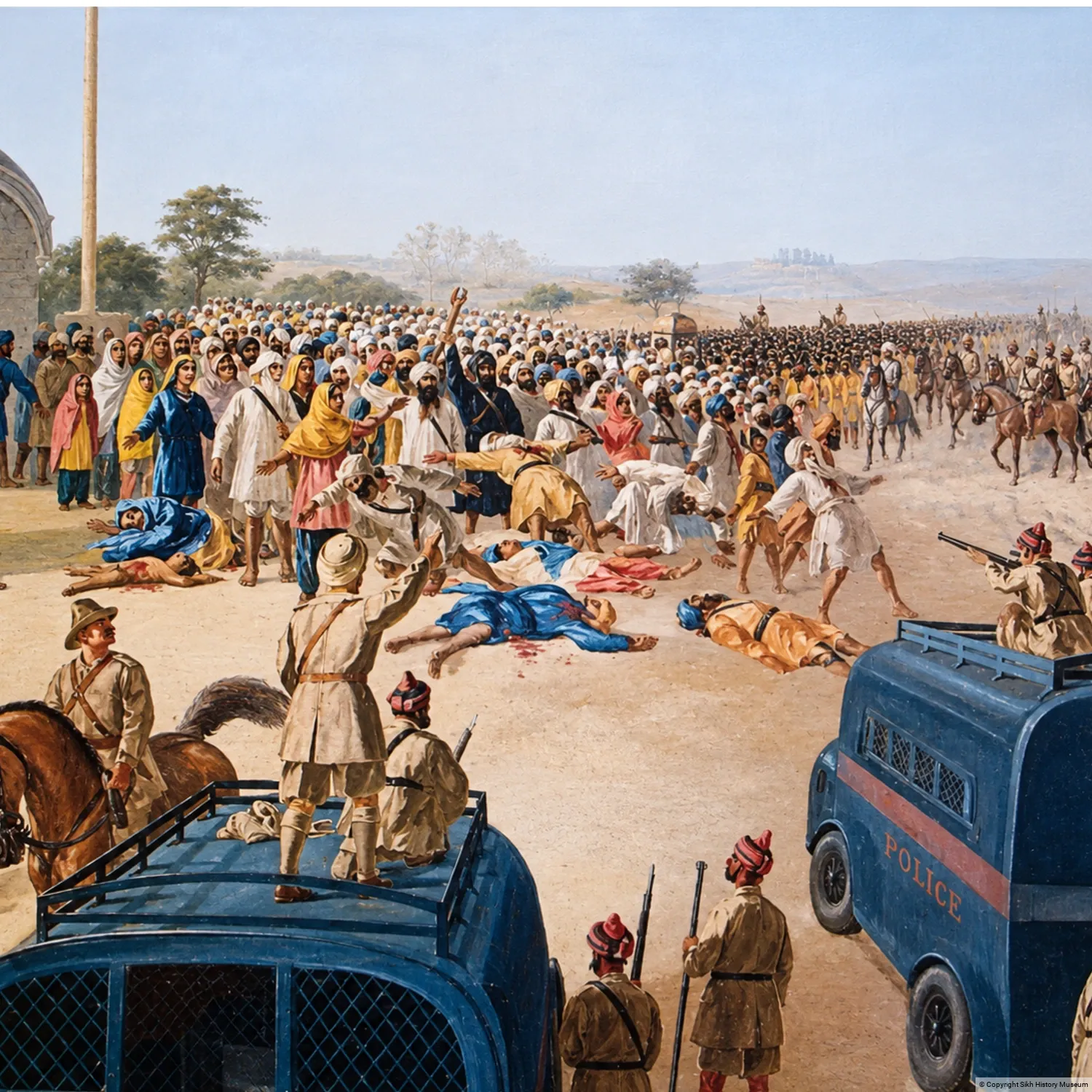
Gurdwara Management
1920
Shiromani Gurdwara Parbandhak Committee (SGPC) and the Akali Party are founded and the SIKH GURDWARA BILL (1925) is passed after many peaceful protests.
Gurdwara Management
1931
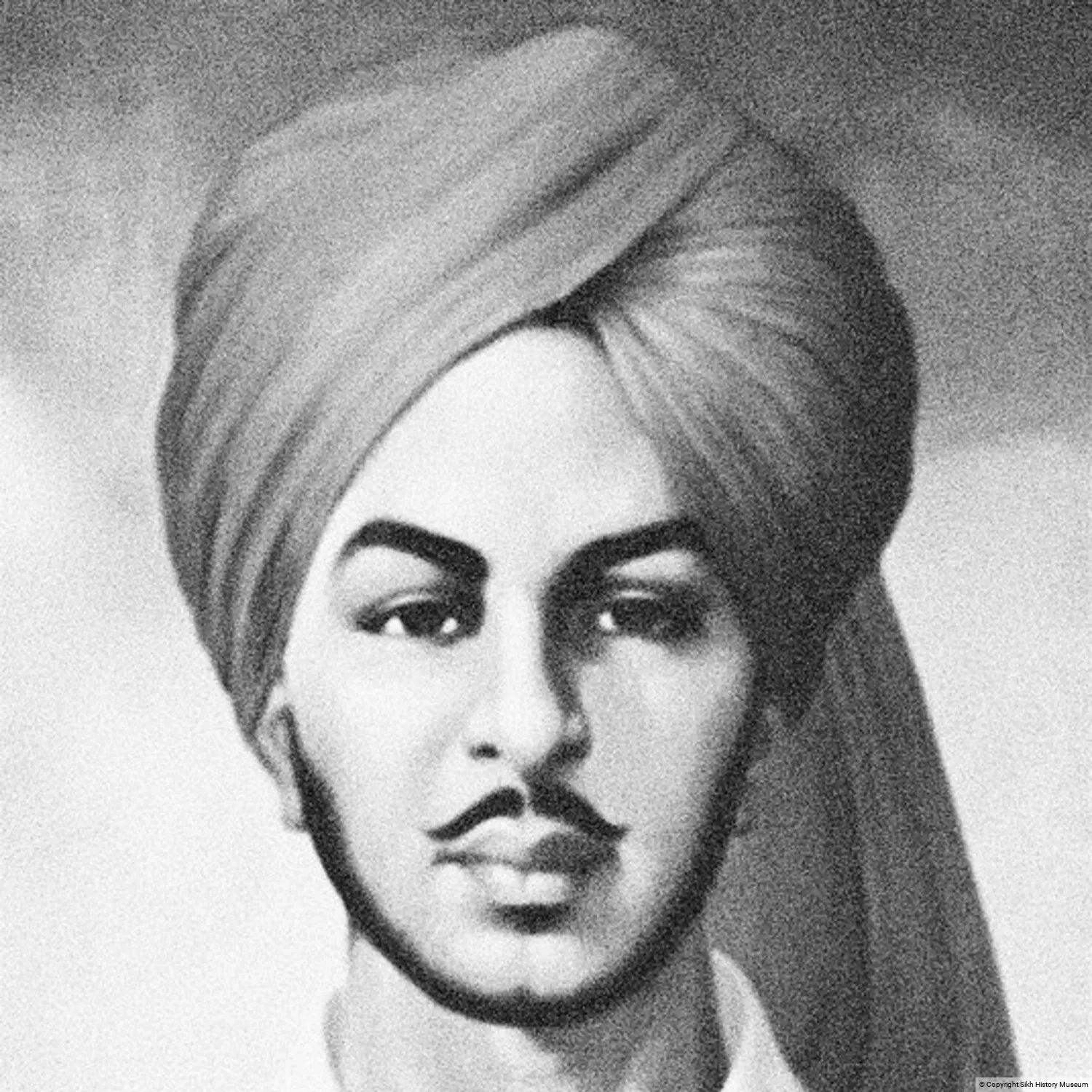
Bhagat Singh
1931
Bhagat Singh, Sukhdev and Rajguru were accused of murder of an English police officer and were executed in Lahore. Their slogans ‘Inquilab zindabad’, was taken to heart by Indians
Bhagat Singh
1939-1945
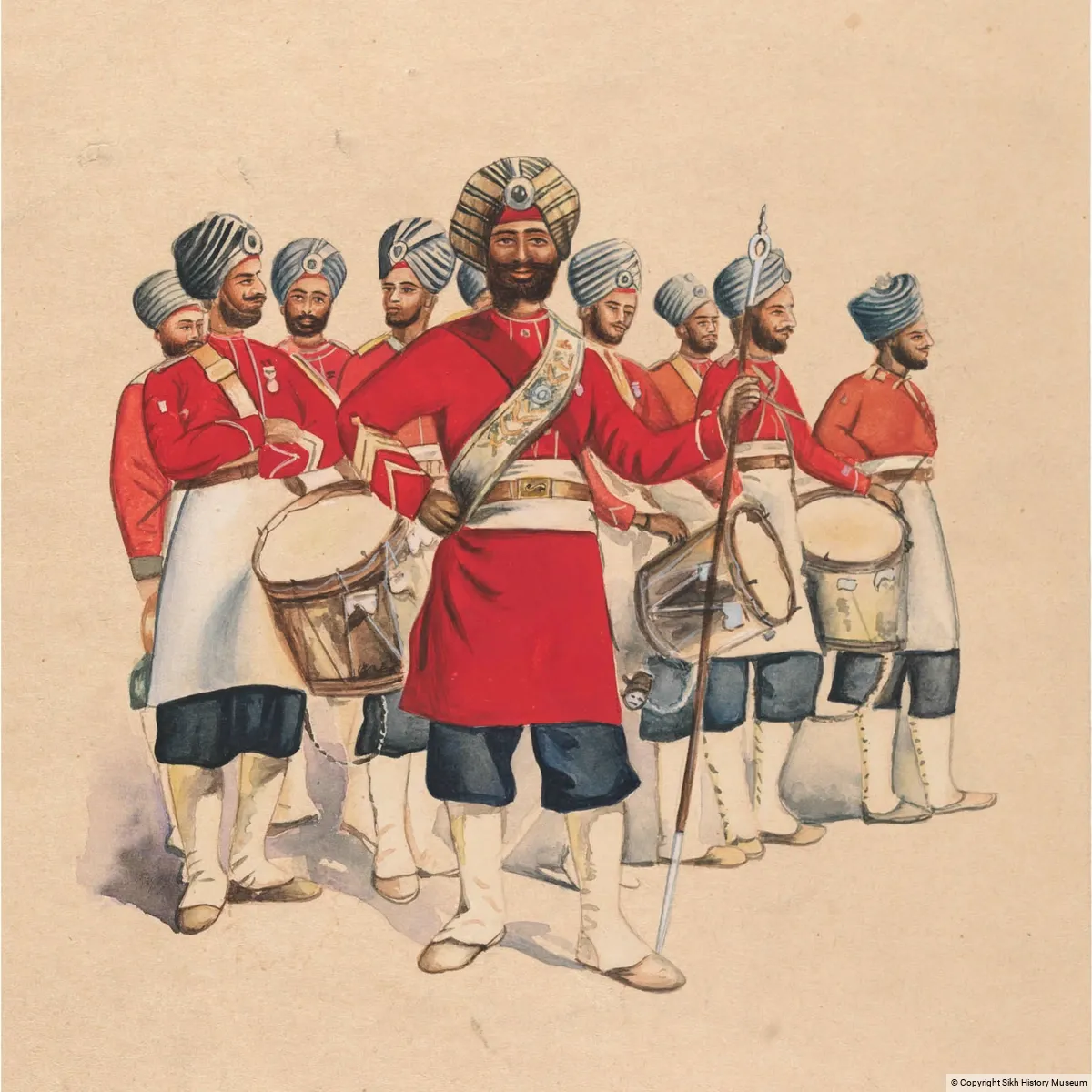
World War II
1939-1945
Over 300,000 Sikhs served in World War 2 - fighting for the Allied Forces in Europe, Africa, and South East Asia. The awards won by Sikhs credited their courage
World War II
1940
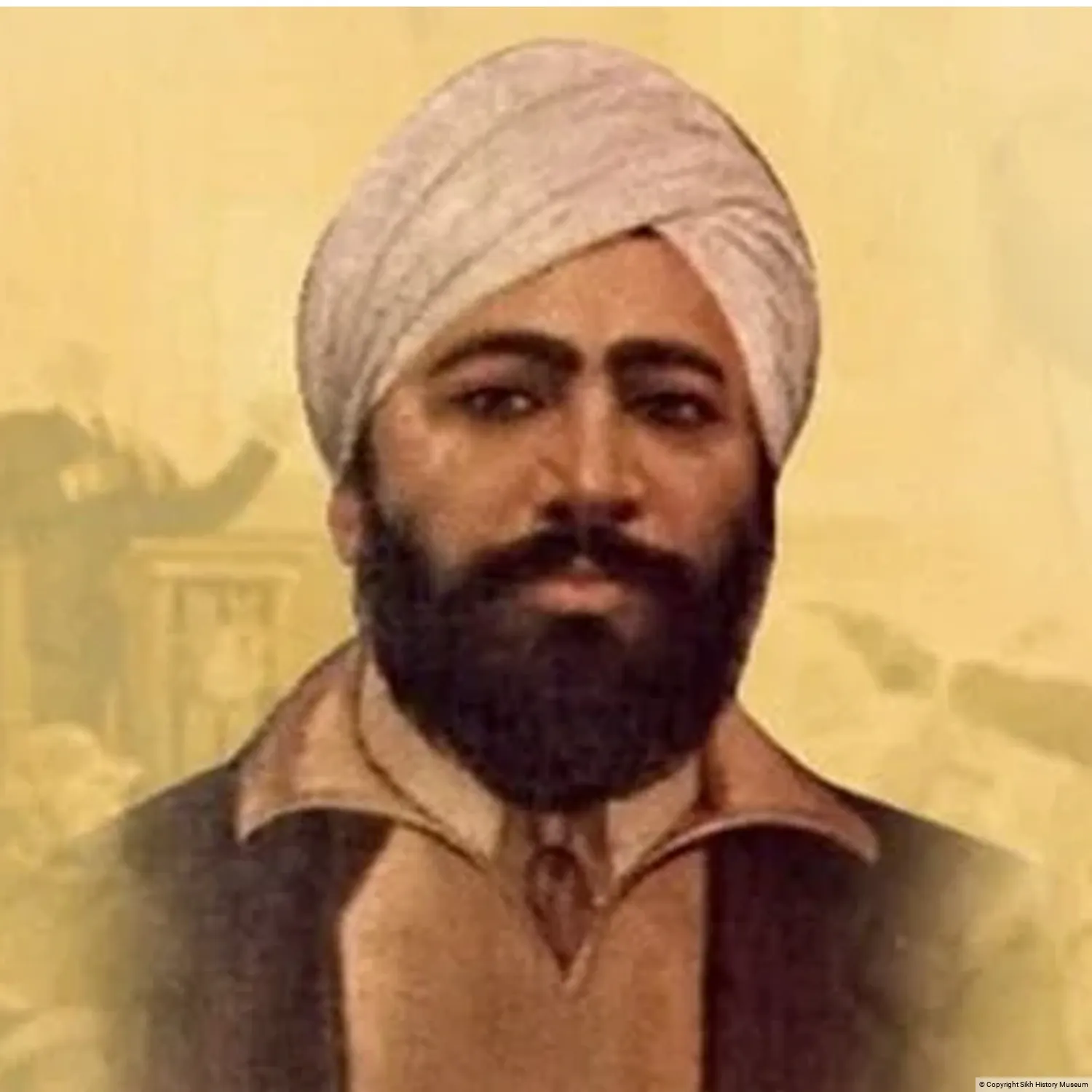
Justice for the Innocent
1940
Udham Singh shoots dead Sir Michel O’Dwyer, in London, who was the Lt. Governor of Punjab at the time of the Jallianwala Bagh massacre.
Justice for the Innocent
1945
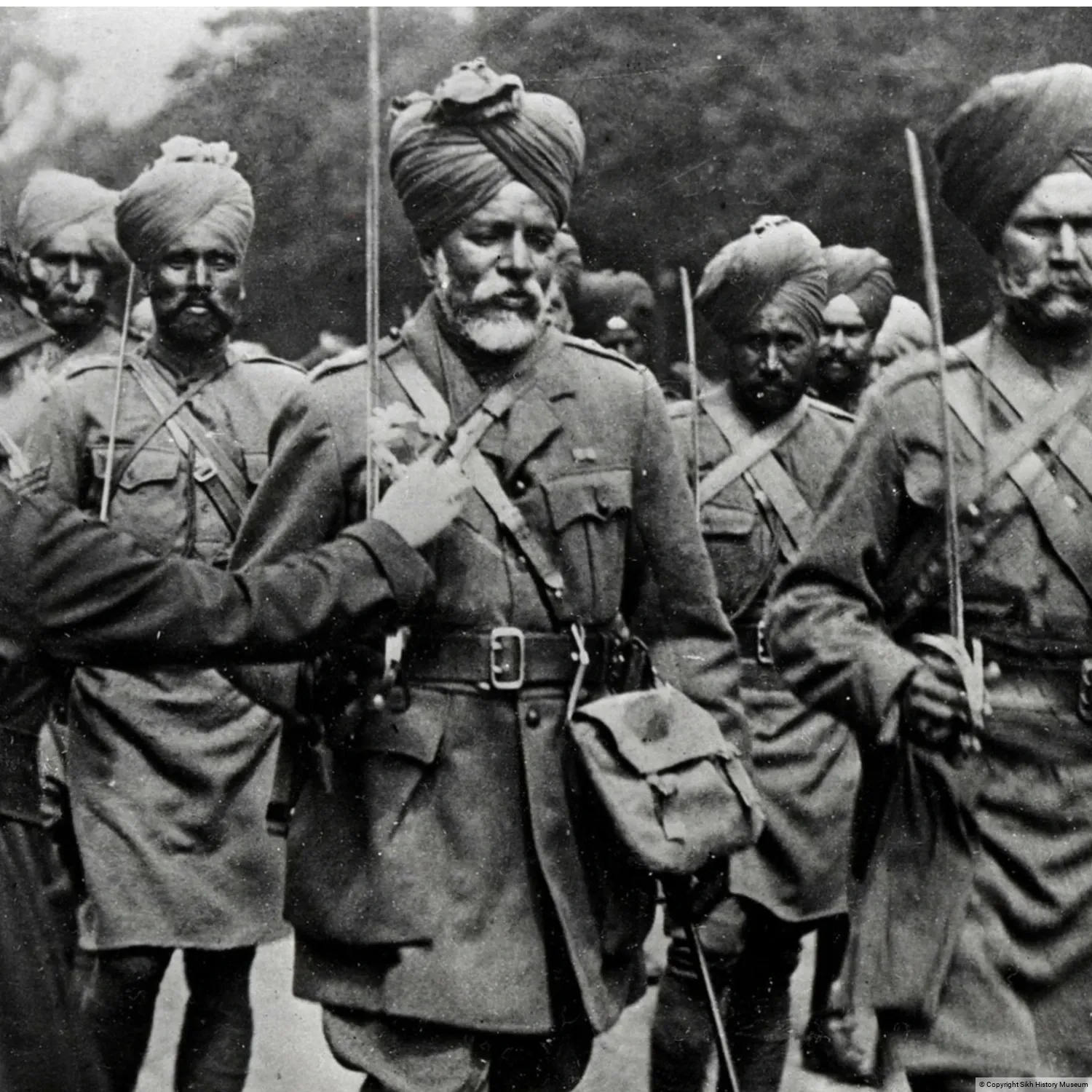
Revolutionary Army
1945
Subhas Chandra Bose, a revolutionary anticolonial figure from Orissa, organizes a group of, largely Sikh, former prisoners of war FROM WW II released by Japan, to fight the British.
Revolutionary Army